Customs Today
  • Home
  • Islamabad
  • Karachi
  • Lahore
  • National
  • Transfers and Postings
  • Chambers & Associations
  • Business
No Result
View All Result
Customs Today
  • Home
  • Islamabad
  • Karachi
  • Lahore
  • National
  • Transfers and Postings
  • Chambers & Associations
  • Business
No Result
View All Result
Customs Today
No Result
View All Result
Home International Customs South Africa

How South Africa’s top 40 companies performed in 2018

byadmin
03/01/2019
in South Africa
Share on FacebookShare on Twitter

South Africa’s top companies have had a difficult year – with shareholders feeling the sting of a weak economy, and a toughening global economic environment.

Of the top 40 companies listed on the JSE, 28 saw their share price tumble over the course of the year, showing precisely how tough big cap corporates have had it in the past 12 months.


You might also like

lamic banking assets reach Rs14.47 trillion, sector share rises to 23%

07/03/2026
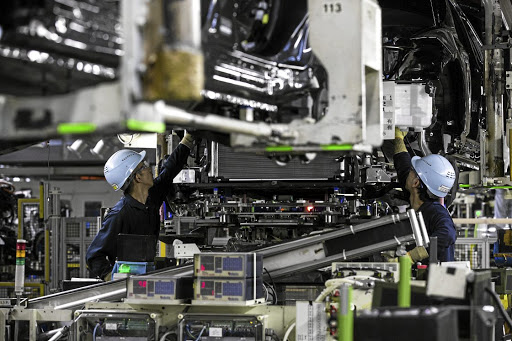
Toyota Motor Corp. employees work on the Crown vehicle production line at the company's Motomachi plant in Toyota City, Aichi, Japan, on Thursday, July 26, 2018. Toyota may stop importing some models into the U.S. if President Donald Trump raises vehicle tariffs, while other cars and trucks in showrooms will get more expensive, according to the automaker’s North American chief. Photographer: Shiho Fukada/Bloomberg

Toyota SA to invest over R4 billion in car assembly and parts

05/02/2020

Leading the biggest losers is Aspen Pharmacare, which saw its share price more than halve over the past 12 months.

Aspen recorded a weak performance in European markets, however, most of its decline has been laid at the feet of its debt levels, with net debt at four times normalised core profit. This set off alarm bells for many investors.

The pharmaceutical giant was not alone, however, with the likes of NEPI Rockcastle, British American Tobacco, Tiger Brands and MTN all seeing steep drops in their share price in 2018.

NEPI was struck more recently through a take-down report by short-seller Viceroy, which alleged that the real-estate fund was overstating its profits.

BAT was hit by declining volumes of products sold and a global move to alternative products like electronic cigarettes, while Tiger Brands suffered due to the listeriosis crisis which hit the country earlier in the year, and was traced to the group’s meat plants in Limpopo and Pretoria.

MTN, meanwhile, has continued to suffer because of its operations in Nigeria, which have taken multiple hits from Nigerian authorities over the years. In 2018, it was claims by the Nigerian Central Bank that the group unlawfully expatriated $8.1 billion in dividends, with the country’s tax authorities chasing after another $2 billion in back-taxes.

MTN has settled the former (in which it will pay just R770 million), while it is still pursuing legal action over the latter claim.

On the more positive side, 12 companies managed to increase their share values over the course of 2018 – led once again by mining groups.

Anglo Platinum saw its share price jump by almost 52% over the past 12 months, while Anglo Gold Ashanti saw a 40.6% rise.

Pepkor group – which recently shed all its ties to scandal-hit Steinhoff – also saw a sizeable jump, though off a low base.

Capitec, which saw its share price plummet at the start of 2018, due to a report by Viceroy, managed to claw back its losses.

The tables below show the biggest winners and losers among the JSE’s top 40 companies in 2018. Values reflect the share prices at 2 January 2018 and 28 December 2018, sourced from Bloomberg data.

Related Stories

lamic banking assets reach Rs14.47 trillion, sector share rises to 23%

byCT Report
07/03/2026

KARACHI: Pakistan’s Islamic banking sector expanded during 2025, increasing its share in the country’s financial system with assets reaching nearly...

Toyota Motor Corp. employees work on the Crown vehicle production line at the company's Motomachi plant in Toyota City, Aichi, Japan, on Thursday, July 26, 2018. Toyota may stop importing some models into the U.S. if President Donald Trump raises vehicle tariffs, while other cars and trucks in showrooms will get more expensive, according to the automaker’s North American chief. Photographer: Shiho Fukada/Bloomberg

Toyota SA to invest over R4 billion in car assembly and parts

byadmin
05/02/2020

Toyota SA Motors (TSAM) has announced a R4.28bn investment in local vehicle assembly and parts supply. Speaking at the company’s...

Toyota Motor Corp. employees work on the Crown vehicle production line at the company's Motomachi plant in Toyota City, Aichi, Japan, on Thursday, July 26, 2018. Toyota may stop importing some models into the U.S. if President Donald Trump raises vehicle tariffs, while other cars and trucks in showrooms will get more expensive, according to the automaker’s North American chief. Photographer: Shiho Fukada/Bloomberg

Toyota SA to invest over R4 billion in car assembly and parts

byadmin
03/02/2020

Toyota SA Motors (TSAM) has announced a R4.28bn investment in local vehicle assembly and parts supply. Speaking at the company’s...

Massmart warns of almost R1.4bn loss as SA consumers struggle

byadmin
30/01/2020

Walmart-owned retailer Massmart, whose brands include Makro and Game, warned on Thursday it had swung into a loss in its...

Next Post

Inflation reached 4-year high in 2018

  • Terms and Conditions
  • Disclaimer

© 2011 Customs Today -World's first newspaper on customs. Customs Today.

No Result
View All Result
  • Transfers and Postings
  • Latest News
  • Karachi
  • Islamabad
  • Lahore
  • National
  • Chambers & Associations
  • Business
  • About Us

© 2011 Customs Today -World's first newspaper on customs. Customs Today.