
Customs Today
  • Home
  • Islamabad
  • Karachi
  • Lahore
  • National
  • Transfers and Postings
  • Chambers & Associations
  • Business
No Result
View All Result
Customs Today
  • Home
  • Islamabad
  • Karachi
  • Lahore
  • National
  • Transfers and Postings
  • Chambers & Associations
  • Business
No Result
View All Result
Customs Today
No Result
View All Result
Home Science & Technology Science

HST spotted magnified image of faintest galaxy

byCT Report
07/12/2015
in Science, Science & Technology
Share on FacebookShare on Twitter

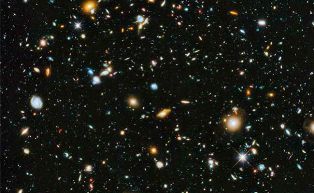
BRENT: NASA says its Spitzer and Hubble space telescopes, working in cosmos-observing tandem, have spotted the magnified image of the faintest galaxy ever from the very early universe.

The object, from around 400 million years after the birth of the universe in the Big Bang, is an example of a small, faint class of newly-forming galaxies that have largely evaded detection until now, astronomers say.


You might also like

Tesla driverless system to use updated radar technology

12/09/2016

Apple to develop its own self-driving technology

10/09/2016

The distant object has been nicknamed “Tayna,” meaning “first-born” in the Aymara language of peoples in the Andes and Altiplano regions of South America.

The dim object should offer new insights into the formation and evolution of the universe’s earliest galaxies, astronomers say in their study appearing in the Astrophysical Journal.

“Thanks to this detection, the team has been able to study for the first time the properties of extremely faint objects formed not long after the Big Bang,” says lead author and astronomer Leopoldo Infante from the Pontifical Catholic University of Chile.

The discovery of more than 20 young galaxies, including Tayna, from ancient times and located at nearly the observable edge of the universe, represents a significant increase in the number of extremely distant galaxies discovered to date.

Tayna is making new stars at a rapid rate, the astronomers say, and could be the evolving core of what is likely to end up as a full-sized galaxy.

The object is so distant and so faint, it was detectable only through a natural cosmic “magnifying glass,” a phenomenon known as gravitational lensing.

A massive cluster of galaxies around four billion light-years from us, known as MACS0416.1-2043, is acting like a powerful lens to bend and magnify the lights of distant, faint objects far behind it, astronomers explain.


Related Stories

Tesla driverless system to use updated radar technology

byCT Report
12/09/2016

WASHINGTON: Electric carmaker Tesla announced Sunday it was upgrading its Autopilot software to use more advanced radar technology. In a...

Apple to develop its own self-driving technology

byCT Report
10/09/2016

SAN FRANCISCO: Apple may not become an automaker, but it still wants to develop its own self-driving technology. The iPhone-maker's...

NASA spots slowest known magnetar

byCT Report
10/09/2016

WASHINGTON: Astronomers have found evidence of a magnetar - magnetised neutron star - that spins much slower than the slowest...

‘YouTubers’ outshining old-school television

byCT Report
09/08/2016

SAN FRANCISCO: A media revolution is taking place, and most people over 35 years of age aren’t tuned in. Millennial...

Next Post

13,800-year-old engravings show 1st illustration of social group among our Paleolithic ancestors

  • Terms and Conditions
  • Disclaimer

© 2011 Customs Today -World's first newspaper on customs. Customs Today.

No Result
View All Result
  • Transfers and Postings
  • Latest News
  • Karachi
  • Islamabad
  • Lahore
  • National
  • Chambers & Associations
  • Business
  • About Us

© 2011 Customs Today -World's first newspaper on customs. Customs Today.