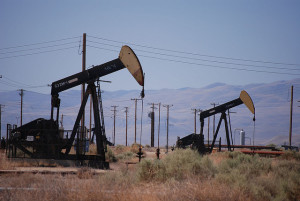
TOKYO: Last year, the United States overtook Saudi Arabia to become the world’s largest oil-producing country for the first time in 39 years.
New technology has led to a boom in the development of shale oil and shale gas in the United States. Crude oil and natural gas trapped in shale deposits were not possible to extract until recently because of the lack of technology.


For a long time, the Middle East was the world’s principal source of crude oil. But the United States seems likely to continue expanding its presence as an oil producer in the coming years.
Because of the expansion of shale gas and oil production in the United States and other factors, crude oil prices have fallen sharply since last summer, from levels well above $100 per barrel to around $60. The global oil market has changed dramatically. Yet Japan’s energy security debate still remains focused on issues related to the Middle East and the Strait of Hormuz.
As a main rationale for new national security legislation being considered by the Diet, the government has cited the vital importance of minesweeping in the Strait of Hormuz for Japan’s energy security. The legislation is designed to allow the Self-Defense Forces to carry out minesweeping in the region.
To enhance its energy security effectively, however, Japan needs to adjust its security strategy to the radical changes taking place in the global energy landscape, such as the emergence of new major suppliers.
Japan has continued to reply heavily on oil imports from the Middle East. The share of oil from the Middle East in Japan’s overall oil consumption is now above 80 percent, up from around 70 percent in the early 1990s, when the region was shaken by the Persian Gulf War. There have been some powerful external factors behind Japan’s increased dependence on oil from the Middle East.
Japan expected an expansion of oil imports from Asian oil-producing countries. But domestic oil consumption in these countries has increased significantly over the years in tandemn with their economic growth, which means they are exporting less oil.
Consequently, the Japanese government and industrial sector have opted to rely more on low-priced and abundantly available oil from the Middle East. But the current situation in the Middle East is again increasing risks to oil supplies from the region.
Even some major oil producing countries, including Libya, are unable to ensure stable crude oil production. In response to the situation, the Japanese government is trying to bolster the nation’s ability to defend the vital shipping lane between Japan and the Middle East. The focus of security policy debate is on the proposal to deploy the SDF to the Middle East.
The United States, which also consumes a huge amount of oil, bans oil exports in principle. But it is expected that the United States will start exporting oil eventually as its oil production grows further.
Japanese companies will soon begin to import natural gas from the United States. Tokyo can and should negotiate with Washington over the lifting of the ban on American oil exports. According to forecasts of oil demand in the world during the period until 2040, growth of demand will be the largest in Asia, especially China.
Japan’s interests as an oil-importing country will continue to coincide with those of China. Japan and China can cooperate to promote their shared interests by, for instance, diversifying their oil suppliers.
Unlike the current Diet debate on the security bills, the world oil market is not driven by concerns about security threats posed by China. There is now growing room for effective diplomatic efforts to bolster Japan’s energy security.