KARACHI: The Pakistan Jute Mills Association (PJMA) has said that the export and consumption of jute products are declining as jute production was 103,957 tonnes in 2003-04 and went down to 101,722 tonnes in 2013-14 and in 2008-09 it was 137,411 tonnes. So the government must introduce mandatory packaging acts like many regional countries to back the industry, the association demanded.
According to a press release, consumption of raw jute in 2007-08 was 134,427 tonnes and in 2013-14 it came down to 108,917 tonnes. The consumption patterns reached a peak of 145,147 tonnes in 2008-09. The declining patterns of consumption and production had adversely affected exports as well, it added.


The government itself has contributed heavily to the environment degradation in 2014 by using 64 million polypropylene bags (equivalent to 3.520 billion polyethylene bags) for wheat and grain storage, the release quoted PJMA Secretary General Muhammad Younus.
The exports of jute goods were 13,563 tonnes in 2007-08 which rose to 19,102 tonnes in 2012-13 but now have fallen down to just 10,039 tonnes in 2013-14. In contrast to this, the import substitution has also declined from $100m in 2006-07 to $95m in 2013-14 while it $116m in 2008-09.
Younus said the jute sector is under tremendous pressure due to various challenges comprising synthetic packaging, lack of research and development, import dependence, labour intensive segment, and rising food commodity prices.
Import dependence of raw material can further be reduced if production of jute is promoted by the government, the PJMA office bearer said.
“Pakistan used to be the biggest importer of raw fibre for its domestic consumption but now China and India lead the fiber import market,” he added.
The jute industry is labour intensive as compared to other industries. The manufacturing wages as percentage of manufacturing cost in the jute industry is around 20 per cent, while it is 7pc in textile and 3pc each in polyester and tractor industries, said Younus.
This shows that the industry needs support from the government in terms of utilities including power and improvement in laws regarding minimum wages and labour.
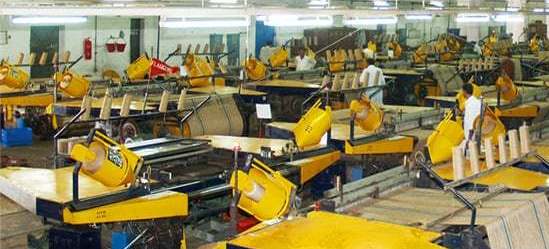
There are five mills in the private sector and the total capacity of the industry is 125,000 tonnes per annum with current production level of 100,000 tonnes. The direct employmentin the industry is 25,000 and it provides indirect livelihood to 100,000 people.