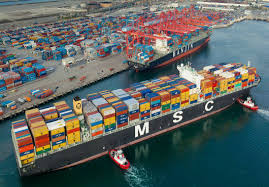
WASHINGTON: As the nation’s two busiest seaports continue to grapple with epic bottlenecks which have slowed the progress of goods to their final destinations, Los Angeles and Long Beach port officials this week took initial steps toward finding solutions.
Port of Los Angeles Executive Director Gene Seroka, Port of Long Beach Chief Jon Slangerup and their executive teams met earlier this week to discuss the guidelines for how the ports will work together to ultimately achieve more efficient cargo movement.

“Through this working group, we will engage with our stakeholders to discuss issues and develop solutions for optimizing cargo flow through our ports,” Seroka said in a statement. “Our ports, customers, labor force and supply chain partners are committed to taking this gateway to a new and higher level of performance, and we’ll accomplish this by working together.”
For the last several months, the twin ports which handles about 40 percent of U.S. imports and 25 percent of U.S. exports have been hammered by congestion caused by a series of issues, including the regular arrival of megaships carrying more cargo from different ocean carriers and the uneven distribution of trailers needed to move containers out of yards.
Those issues worsened when contract talks between dockworkers and their employers grew contentious, causing months of productivity slowdowns.
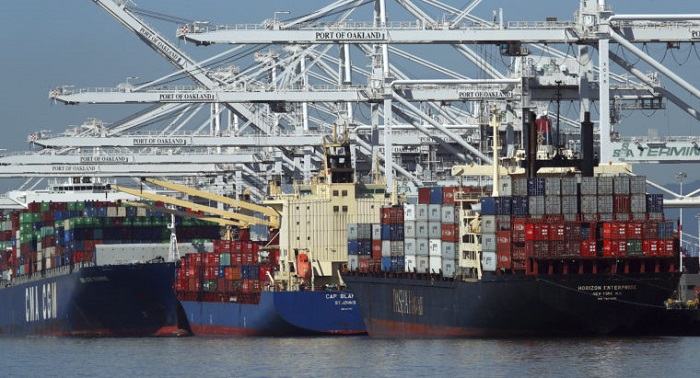
That perfect storm has resulted in ships stranded at sea waiting to be unloaded, long truck lines and weekslong shipment delays, prompting some customers to reroute goods elsewhere.
The effects of congestion showed in the twin ports’ plunging cargo numbers for January and February.
While officials from both ports have been working on their own on various ways to solve specific congestion issues, both expressed a need to tackle the long-term issues of cargo flow together.
“Our shared goal is to optimize the performance of the trans-Pacific supply chain,” Slangerup said in a statement. “The San Pedro Bay has always been the fastest route between Asia and the U.S., and I’m confident we will find ways to significantly increase the velocity of goods movement and overall efficiency of our end-to-end system.”