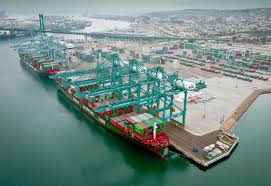
The nation’s largest container port is still feeling the sting of labor strife earlier this year, with cargo volume declining at a steep rate in April.
March had been a promising month for the Port of Los Angeles after West Coast port employers and the longshore workers’ union signed a contract in mid-February and moved quickly to clear a backlog of dozens of ships. Los Angeles saw its second-busiest month in the port’s history in the month after the labor settlement.


But loaded container cargo volume at the port fell 11.8% in April compared to the same month a year ago, as Los Angeles saw business weaken sharply after the port finally cleared out the backlog of cargo that grew earlier in the year.
Import volume at Los Angeles, the largest U.S. gateway for goods coming from Asia, fell back 9.9% year-over-year and was down 24% from the near-record level in March. The neighboring Port of Long Beach saw stronger results, with April import volume actually up 7.3% year-over-year while exports fell back 6.1%.
Because the two ports handle as much as 40% of U.S. ocean container cargo, which consists largely of consumer goods, Los Angeles and Long Beach are something of a bellwether of the American retail economy. The decline in April at Los Angeles, however, was steeper than at other U.S. ports, suggesting the impact of the labor unrest that finally ended in late February hit the port particularly hard.
In a statement, Los Angeles port officials said the declines may be partly the result of unusually strong growth in 2014 that make for tougher comparisons this year. April 2014 may have been “particularly robust,” port officials said, as importers ordered goods early in anticipation of delays related to labor negotiations, which kicked off last May.
As the negotiations stretched into the busy holiday season last year, slowdowns in cargo handling at ports along the West Coast prompted many retailers to redirect shipments to East Coast and ports in Mexico and Canada. If shippers and logistics providers stick with those alternative gateways, the coast’s two largest ports could lose significant business.So far this year, despite the March recovery, overall volumes in Los Angeles are off 5.3% from last year.
For other major West Coast ports, April brought calm. The Washington ports of Seattle and Tacoma, and the Port of Oakland all reported a return to somewhat normal operations after spikes upward in March.
Although many cargo owners decried the impact of the port problems on their supply chains, it will take time for the long-term effect on shipping to become clear. For companies like big-box retailer Cosco Wholesale Inc., which has an established network of operations centers and a system of delivering its goods throughout the U.S., significant changes to its supply chain does not make much sense.