Customs Today
  • Home
  • Islamabad
  • Karachi
  • Lahore
  • National
  • Transfers and Postings
  • Chambers & Associations
  • Business
No Result
View All Result
Customs Today
  • Home
  • Islamabad
  • Karachi
  • Lahore
  • National
  • Transfers and Postings
  • Chambers & Associations
  • Business
No Result
View All Result
Customs Today
No Result
View All Result
Home Science & Technology

Low cost smart light invented to detect Ebola

byCustoms Today Report
28/10/2014
in Science & Technology
Share on FacebookShare on Twitter

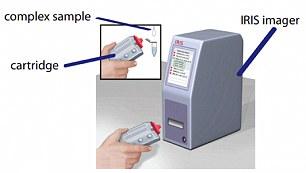
MASSACHUSETTS, US: The scientists have invented a low cost light that can detect Ebola in blood samples within 30 minutes.

Experts say the shoebox-sized gadget can be operated by anyone, and could be shipped to west Africa to help monitor the spread of the disease. It works by reflecting light, and has been shown to be effective in spotting the Ebola virus.


You might also like

Tesla driverless system to use updated radar technology

12/09/2016

Apple to develop its own self-driving technology

10/09/2016

One of the big problems hindering containment of Ebola is the cost and difficulty of diagnosing the disease when a patient is first seen, researchers say.

Conventional fluorescent label-based virus detection methods require expensive lab equipment, significant sample preparation, transport and processing times, and extensive training to use.

The Boston University team has spent the past five years advancing its solution. They say the device could be used to diagnose Ebola and other hemorrhagic fever diseases in resource-limited countries.

The first demonstration of the concept, described in the American Chemical Society journal Nano Letters in 2010 and developed by an ENG research group led by Selim Ünlü, a professor of biomedical engineering, electrical and computer engineering, and materials science and engineering, in collaboration with Bennett Goldberg, a College of Arts & Sciences professor of physics, showed the ability to pinpoint and size single H1N1 virus particles.


Tags: Africabiomedicalblood samplesBoston UniversityEbolaMASSACHUSETTSNano Lettersphysicsresearchersscientistssmart lightvirus

Related Stories

Tesla driverless system to use updated radar technology

byCT Report
12/09/2016

WASHINGTON: Electric carmaker Tesla announced Sunday it was upgrading its Autopilot software to use more advanced radar technology. In a...

Apple to develop its own self-driving technology

byCT Report
10/09/2016

SAN FRANCISCO: Apple may not become an automaker, but it still wants to develop its own self-driving technology. The iPhone-maker's...

NASA spots slowest known magnetar

byCT Report
10/09/2016

WASHINGTON: Astronomers have found evidence of a magnetar - magnetised neutron star - that spins much slower than the slowest...

‘YouTubers’ outshining old-school television

byCT Report
09/08/2016

SAN FRANCISCO: A media revolution is taking place, and most people over 35 years of age aren’t tuned in. Millennial...

Next Post

Azerbaijan Customs reduces time for goods’ clearance

  • Terms and Conditions
  • Disclaimer

© 2011 Customs Today -World's first newspaper on customs. Customs Today.

No Result
View All Result
  • Transfers and Postings
  • Latest News
  • Karachi
  • Islamabad
  • Lahore
  • National
  • Chambers & Associations
  • Business
  • About Us

© 2011 Customs Today -World's first newspaper on customs. Customs Today.