
Customs Today
  • Home
  • Islamabad
  • Karachi
  • Lahore
  • National
  • Transfers and Postings
  • Chambers & Associations
  • Business
No Result
View All Result
Customs Today
  • Home
  • Islamabad
  • Karachi
  • Lahore
  • National
  • Transfers and Postings
  • Chambers & Associations
  • Business
No Result
View All Result
Customs Today
No Result
View All Result
Home Science & Technology Science

Machine learning helps Stanford physicists predict hazardous solar flares

byCustoms Today Report
16/01/2015
in Science, Science & Technology
Share on FacebookShare on Twitter

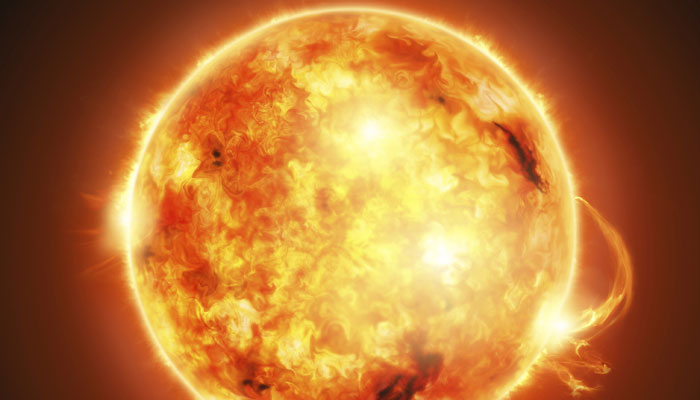
FRANCE: Physicists from Stanford University have applied a machine learning algorithm to better forecast solar flares that could expose high-flying airline passengers to radiation and disrupt power grids and communication satellites.

Physicists Monica Bobra and Sebastien Couvidat thought about applying machine learning to the huge amount of data they had from NASA’s Solar Dynamics Observatory (SDO) satellite. The Stanford Solar Observatories Group processes and stores 1.5 terabytes of that data per day.


You might also like

Tesla driverless system to use updated radar technology

12/09/2016

Apple to develop its own self-driving technology

10/09/2016

The SDO’s Helioseismic Magnetic Imager was also used to collect vector magnetic field observations.

After taking an online machine learning course at Stanford, Bobra and Couvidat applied what they learnt to their study on solar flares to see if the support vector machine algorithm could provide early warning of the most hazardous types of solar flares: M-class and X-class.

M-class solar flares are medium-large flares that cause minor radiation storms that could endanger astronauts and cause short radio blackouts at Earth’s poles. X-class are the largest flares and can cause a lot more damage.

Tags: Bobra and CouvidatMachine learning helps Stanford physicistsMonica Bobra and Sebastien Couvidatphysicists predict hazardous solar flares earlierSDO's Helioseismic Magnetic ImagerStanford University

Related Stories

Tesla driverless system to use updated radar technology

byCT Report
12/09/2016

WASHINGTON: Electric carmaker Tesla announced Sunday it was upgrading its Autopilot software to use more advanced radar technology. In a...

Apple to develop its own self-driving technology

byCT Report
10/09/2016

SAN FRANCISCO: Apple may not become an automaker, but it still wants to develop its own self-driving technology. The iPhone-maker's...

NASA spots slowest known magnetar

byCT Report
10/09/2016

WASHINGTON: Astronomers have found evidence of a magnetar - magnetised neutron star - that spins much slower than the slowest...

‘YouTubers’ outshining old-school television

byCT Report
09/08/2016

SAN FRANCISCO: A media revolution is taking place, and most people over 35 years of age aren’t tuned in. Millennial...

Next Post

US Port of Lewiston faces problems as shipping containers' No. plunges to lowest since 1991

  • Terms and Conditions
  • Disclaimer

© 2011 Customs Today -World's first newspaper on customs. Customs Today.

No Result
View All Result
  • Transfers and Postings
  • Latest News
  • Karachi
  • Islamabad
  • Lahore
  • National
  • Chambers & Associations
  • Business
  • About Us

© 2011 Customs Today -World's first newspaper on customs. Customs Today.