Customs Today
  • Home
  • Islamabad
  • Karachi
  • Lahore
  • National
  • Transfers and Postings
  • Chambers & Associations
  • Business
No Result
View All Result
Customs Today
  • Home
  • Islamabad
  • Karachi
  • Lahore
  • National
  • Transfers and Postings
  • Chambers & Associations
  • Business
No Result
View All Result
Customs Today
No Result
View All Result
Home Science & Technology Science

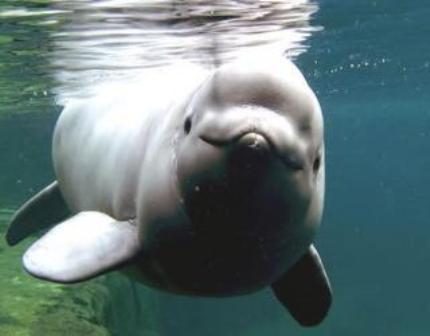
Marine mammals can suffer from irregular heartbeats on diving deep

byCustoms Today Report
20/01/2015
in Science, Science & Technology
Share on FacebookShare on Twitter

HONG KONG: According to a new study by researchers from the University of California revealed that seals and dolphins also experienced irregular heartbeats when doing a deep dive to hunt to for food.

The researchers added that cardiac rhythm complications in both Weddell seals and bottlenose dolphins happens when they hold their breath for a long period of time.


You might also like

Tesla driverless system to use updated radar technology

12/09/2016

Apple to develop its own self-driving technology

10/09/2016

Terrie Williams, a professor of ecology and evolutionary biology and the University of California, Santa Cruz explained that conflicting signals to the heart can lead to cardiac arrhythmias.

“This study changes our understanding of bradycardia in marine mammals,” Williams says. “The heart is receiving conflicting signals when the animals exercise intensely at depth, which often happens when they are starting their ascent. We’re not seeing lethal arrhythmias, but it is putting the heart in an unsteady state that could make it vulnerable to problems.”

During analysis, researchers found out that the heart rates of diving animals varied with both depth and exercise intensity. They said it changes from bradycardia and tachycardia and 70 percent of the time, marine animals suffer from cardiac arrhythmia.

“We tend to think of marine mammals as completely adapted to life in the water. However, in terms of the dive response and heart rate, it’s not a perfect system,” Williams says. “Even 50 million years of evolution hasn’t been able to make that basic mammalian response impervious to problems.”

“This study is not saying that these deep-diving animals will die if they exercise hard at depth,” Williams says. “Rather, it raises questions about what happens physiologically when extreme divers are disturbed during a dive, and it needs further investigation.”


Tags: diving deep;Even 50 million years of evolutionfurther investigation.”Marine mammals can suffer from irregular heartbeatsSanta Cruz.University of California

Related Stories

Tesla driverless system to use updated radar technology

byCT Report
12/09/2016

WASHINGTON: Electric carmaker Tesla announced Sunday it was upgrading its Autopilot software to use more advanced radar technology. In a...

Apple to develop its own self-driving technology

byCT Report
10/09/2016

SAN FRANCISCO: Apple may not become an automaker, but it still wants to develop its own self-driving technology. The iPhone-maker's...

NASA spots slowest known magnetar

byCT Report
10/09/2016

WASHINGTON: Astronomers have found evidence of a magnetar - magnetised neutron star - that spins much slower than the slowest...

‘YouTubers’ outshining old-school television

byCT Report
09/08/2016

SAN FRANCISCO: A media revolution is taking place, and most people over 35 years of age aren’t tuned in. Millennial...

Next Post

Indian Forest department seizes stolen vehicle worth Rs 40,000

  • Terms and Conditions
  • Disclaimer

© 2011 Customs Today -World's first newspaper on customs. Customs Today.

No Result
View All Result
  • Transfers and Postings
  • Latest News
  • Karachi
  • Islamabad
  • Lahore
  • National
  • Chambers & Associations
  • Business
  • About Us

© 2011 Customs Today -World's first newspaper on customs. Customs Today.