KENYA: The Mombasa Port’s services had hit rock bottom resulting to massive congestion and delays in delivery of cargo from vessels calling at the port for which the current government is seeking measures now to prevent the congestion and to sustain energy at Mombasa Port.
About 10 or so years ago, the previous government under President Kibaki had embarked on an impressive reform program aimed at transforming the port which was hitherto reeling under heavy financial crisis and inefficiency owing to run-down equipment and a demoralized workforce.

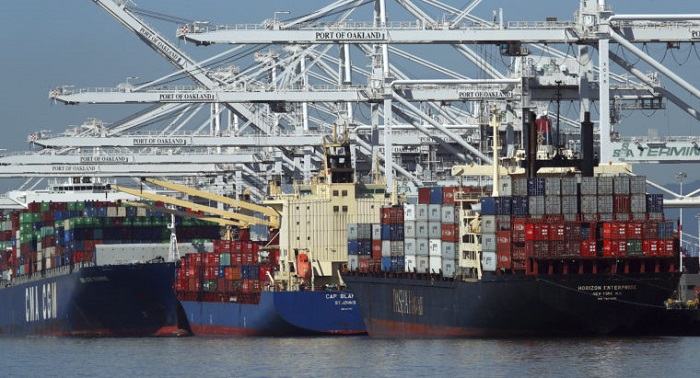
At that point, the port services had hit rock bottom resulting to massive congestion and delays in delivery of cargo from vessels calling at the port.
Due to the prolonged delays, vessel operators introduced delay surcharges which shippers had to pay for all cargo discharged at the port.
In a bid to alleviate the situation, a lot of concerted efforts were made by the port community which involved both public and private sector stakeholders.
Kifwa, which represents the freight forwarders, was among the groups that continually demanded for government intervention to sort out the problems which had seemingly overwhelmed the port’s management.
Eventually the government owned up to the crisis and sought to formally engage with the private sector to address the challenges. In the process, a raft of measures was taken aimed at improving the port’s capacity to handle the increasing number of vessels and to enhance cargo off-take from the port.
First, the government allowed establishment of container freight stations (CFS) to be operated by the private sector. The CFSs, which now number about 14, operate as extensions of the port and handle all imports and transit cargo including containers, conventional cargo and motor vehicles.
Second, the port authority purchased new equipment including gantry cranes and tractors for handling cargo at its container terminal. A modern and relatively more efficient IT system was also procured to replace the manual financial accounting and documentation processes.
Third, all providers of essential port services agreed to embrace a 24-hour operation strategy to render round-the-clock unhindered services to the shippers.
Fourth, and most significantly, the port community adopted a Port Service Charter which bound and committed the various stakeholders – both from the public and private sectors – to adhere to certain key performance indicators aimed at improving and sustaining delivery of maritime related services including port operations, freight logistics, Customs documentation and transportation along the northern corridor, among others.
Government must therefore spare no efforts to safeguard the gains so far attained. Clear proof of lack of strict regulation is evident from the many negative trends which are now creeping into the freight industry.
As a result, the port city’s infrastructure and road network is now getting choked due to illegal structures and unchecked business practices. To forestall the ensuing crisis, Kifwa is urging government to take following measures:
One – freeze licensing of more CFSs. And those operating within the port or along Makupa causeway must be relocated to the mainland. Mushrooming of CFSs on the causeway is one of the major causes of frequent traffic snarl-ups on the busy highway.
Two – the Cabinet Secretary for Transport should immediately gazette regulations for CFS operations, if they are an extension of the port. Some CFS operators are exploiting this loophole by overcharging services they provide since they are technically autonomous entities.
Three – seek an immediate solution to the long standing Court case filed by the multinational Shipping Lines against government about the Kenya Maritime Authority Regulations.
Four – urgently develop a policy framework to formally constitute the consultative forum between the public and private sectors under the auspices of the Port Community, and for implementation of the Port Service Charter. Presently, top government officials don’t take seriously resolutions arrived at by stakeholders’ forum.