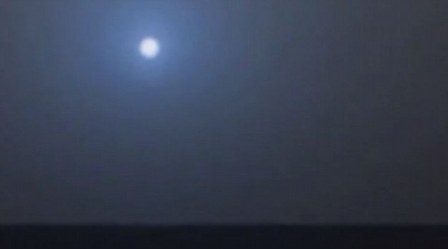


MEXICO: According to NASA, fine dust particles in Mars’s thin atmosphere tend to make the planet’s sky look reddish normally.
“But the dust also scatters blue light in the forward direction, creating a bluish sky glow near the setting sun,” NASA said in a caption for a sunset photo taken by Opportunity’s twin, the Spirit rover, in 2005.
In fact, NASA captures sunset images in part to figure out how high into the atmosphere the dust goes and to look for clouds made of dust or ice.
The sun also looks very small because Mars is farther away from the sun than Earth.
However, the twilight glow lasts a lot longer on Mars than it does on Earth – up to two hours after the sun sets.
That’s because of all the dust in the atmosphere scattering the light from the side of the planet that’s facing the sun.
Want to see a Mars-like sunset on Earth? NASA says it sometimes occurs after volcanic eruptions that scatter dust high into Earth’s atmosphere.
Opportunity wasn’t the only rover that provided a new perspective on Mars this week.
The Curiosity also sent back a stunning new selfie – a mosaic of images captured using the camera on its robotic arm in January. The arm doesn’t appear in the images.
Curiosity is standing on a site called “Mojave” on Mount Sharp, where it has been exploring and drilling samples for chemical analysis.

Pakistan to get $3b loan from Islamic Trade Financing Corporation
ISLAMABAD: Islamic Trade Financing Corporation (ITFC) to provide Pakistan with a $3 billion loan, according to an official statement released...