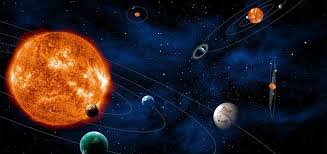


NEW YORK: Using the Spitzer Space Telescope, scientists have discovered many new exoplanets that they have never known before. Rather, it might be more accurate to say that our newest technology has finally confirmed what many have believed for a very long time: that there are probably an infinite number of world’s out there.
Anything which would qualify as a planet but is not part of our solar system, though, is considered an “exoplanet,” and scientists have been finding these “exoplanets” all over the place!
One of the most recent exoplanets to be discovered, though, is the furthest away from Earth ever to have been found. At least, so far.
This planet is a gas giant (so that means it is much like our Jupiter) and it lives in the middle of space at 13,000 light years from our Earth.
Of course, NASA still wants to find more planets and, more importantly, determine if these planets are more common in the central bulge of our Milky Way galaxy or as far out as the spiral arms of our galaxy reach (which is where our solar system lives).
“We don’t know if planets are more common in our galaxy’s central bulge or the disk of the galaxy, which is why these observations are so important,” explains lead study author Jennifer Yee, of the Harvard-Smithsonian Center for Astrophysics.
This exoplanet was found through a phenomenon called microlensing. Study co-author Andrew Gould of Ohio State University, in Columbus, explains “Microlensing experiments are already detecting planets from the solar neighborhood to almost the center of the Milky Way. And so they can, in principle, tell us the relative efficiency of planet formation across this huge expanse of our galaxy”.

Pakistan to get $3b loan from Islamic Trade Financing Corporation
ISLAMABAD: Islamic Trade Financing Corporation (ITFC) to provide Pakistan with a $3 billion loan, according to an official statement released...