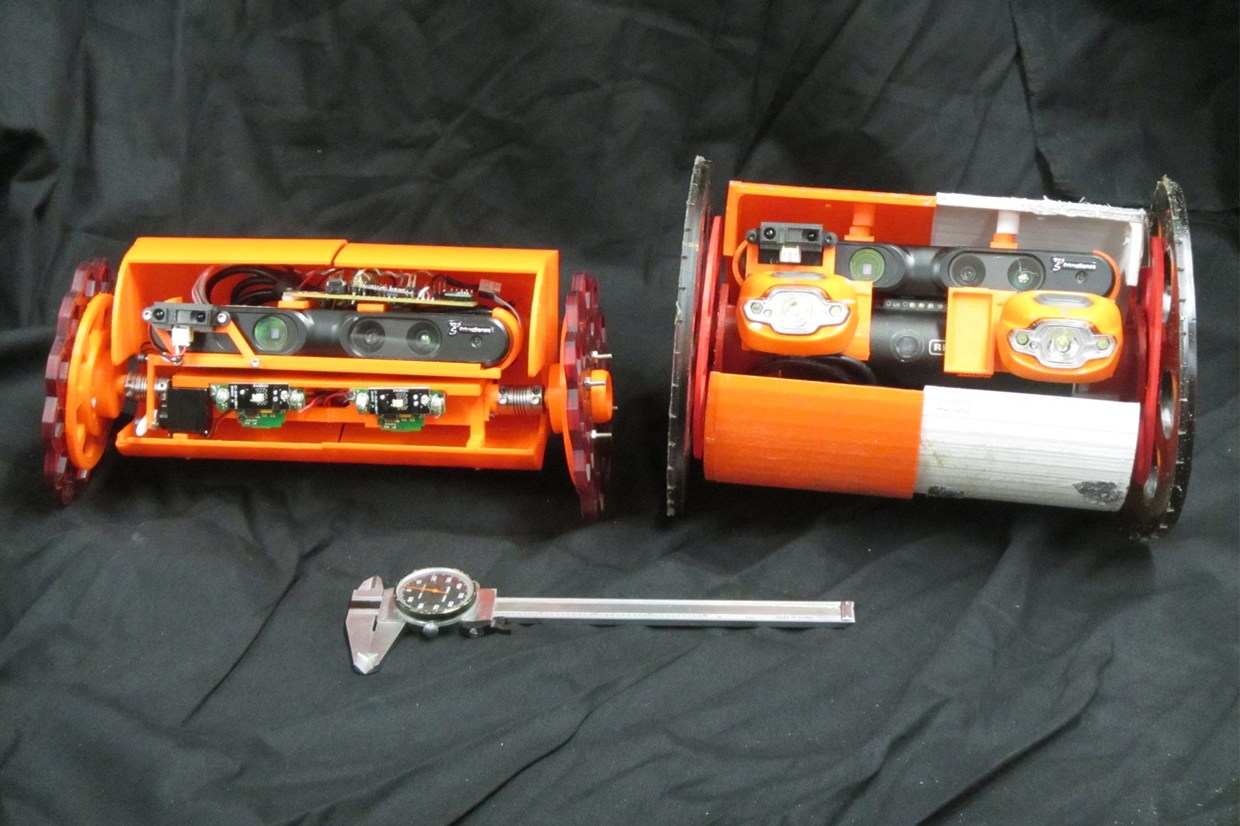

MEXICO: Researchers at NASA’s Jet Propulsion Laboratory in Pasadena, California, have invented a robot that will be able to dive inside and explore its fissures.
Dubbed “VolcanoBot 1,” this geological trooper was inspired by JPL postdoctoral fellow Carolyn Parcheta’s longtime fascination with volcanoes. Recalling a pivotal moment when she witnessed a researcher take a lava sample on a science TV program video in school, Parcheta vowed that she’d do something similar one day.
Driven by this desire to glean more insights into these fascinating and dangerous geological features, Parcheta said that although there are simplified models around, no one knows exactly how volcanoes erupt.
Parcheta’s co-adviser, JPL robotics researcher Aaron Parness, said her lab presence has offered an extra geological angle onto their project. “Scientists and engineers working together on such a small team is pretty rare, but has generated lots of great ideas because our perspectives on the problems are so different.”
VolcanoBot 1’s first mission was a venture into now inactive Kilauea volcano in Hawaii back in May 2014. The research team hopes that the rover’s findings will also shed light on volcanoes in space.
According to Parcheta, fissures are the most common physical features from which magma erupts on both Earth and Mars. Furthermore, she asserts that this could also apply to volcanoes that would have been active previously on Europa, Mercury, and the moon.
“In the last few years, NASA spacecraft have sent back incredible pictures of caves, fissures and what look like volcanic vents on Mars and the moon,” said Parness.
“We don’t have the technology yet to explore them, but they are so tantilising!” said Parness, who said that working with Parcheta would allow the team to bridge the gap in understanding by using volcanoes on Earth as practice.

Tesla driverless system to use updated radar technology
WASHINGTON: Electric carmaker Tesla announced Sunday it was upgrading its Autopilot software to use more advanced radar technology. In a...