Customs Today
  • Home
  • Islamabad
  • Karachi
  • Lahore
  • National
  • Transfers and Postings
  • Chambers & Associations
  • Business
No Result
View All Result
Customs Today
  • Home
  • Islamabad
  • Karachi
  • Lahore
  • National
  • Transfers and Postings
  • Chambers & Associations
  • Business
No Result
View All Result
Customs Today
No Result
View All Result
Home Science & Technology Science

NASA’s Dawn spacecraft’s views of ceres heightened mystery of the white spots

byCustoms Today Report
06/02/2015
in Science, Science & Technology
Share on FacebookShare on Twitter

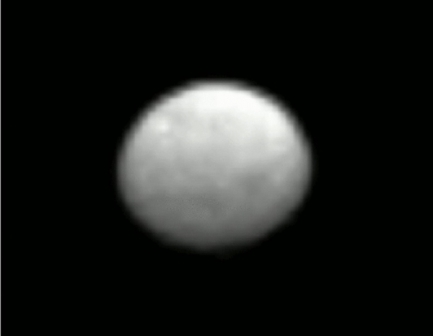
MEXICO: NASA’s Dawn spacecraft is snapping increasingly detailed pictures of the dwarf planet Ceres as it zooms in for next month’s rendezvous, but so far the images have only heightened the mystery surrounding bright spots on the surface.

The pictures released Thursday show that Ceres — the largest asteroid as well as the closest and smallest known dwarf planet — is pockmarked by craters. The craters are to be expected: The 590-mile-wide (950-kilometer-wide) mini-world has been pummeled for billions of years by other objects in the asteroid belt. But the white spots? They’re a real puzzle.


You might also like

Tesla driverless system to use updated radar technology

12/09/2016

Apple to develop its own self-driving technology

10/09/2016

One spot in particular has shown up prominently in pictures from the Hubble Space Telescope and from Dawn, which was launched back in 2007 to study Ceres and its sister asteroid Vesta. The latest pictures, taken on Wednesday from a distance of about 90,000 miles (145,000 kilometers), appear to show still more bright blips on Ceres. Are they patches of light material or ice at the bottom of craters? Or frost on the top of prominences?

“We are at a phase in the mission where the curtain is slowly being pulled back on the nature of the surface,” UCLA planetary scientist Chris Russell, the principal investigator for the $466 million mission, told NBC News in an email. “But the surface is different from that of other planets, and at this stage the increasing resolution presents more mysteries rather than answers them.”

Russell said the science team was particularly interested in the big bright spot and the region surrounding it.

“Naively we expect a bright region to be fresh and a dark region to be old. So the surface of Ceres seems to have a number of circular features of varying freshness on a predominantly dark, presumably old surface,” Russell wrote. “The one type of feature that clearly came into view this time were examples of central peak craters with overall similarity to large lunar craters.”


Tags: cares join to mysteryChris RussellNASA's Dawn spacecraftNBC Newsspacecraft’s views of careswhite spots

Related Stories

Tesla driverless system to use updated radar technology

byCT Report
12/09/2016

WASHINGTON: Electric carmaker Tesla announced Sunday it was upgrading its Autopilot software to use more advanced radar technology. In a...

Apple to develop its own self-driving technology

byCT Report
10/09/2016

SAN FRANCISCO: Apple may not become an automaker, but it still wants to develop its own self-driving technology. The iPhone-maker's...

NASA spots slowest known magnetar

byCT Report
10/09/2016

WASHINGTON: Astronomers have found evidence of a magnetar - magnetised neutron star - that spins much slower than the slowest...

‘YouTubers’ outshining old-school television

byCT Report
09/08/2016

SAN FRANCISCO: A media revolution is taking place, and most people over 35 years of age aren’t tuned in. Millennial...

Next Post

Robot scientist 'Eve' could discover drugs faster, more efficiently

  • Terms and Conditions
  • Disclaimer

© 2011 Customs Today -World's first newspaper on customs. Customs Today.

No Result
View All Result
  • Transfers and Postings
  • Latest News
  • Karachi
  • Islamabad
  • Lahore
  • National
  • Chambers & Associations
  • Business
  • About Us

© 2011 Customs Today -World's first newspaper on customs. Customs Today.