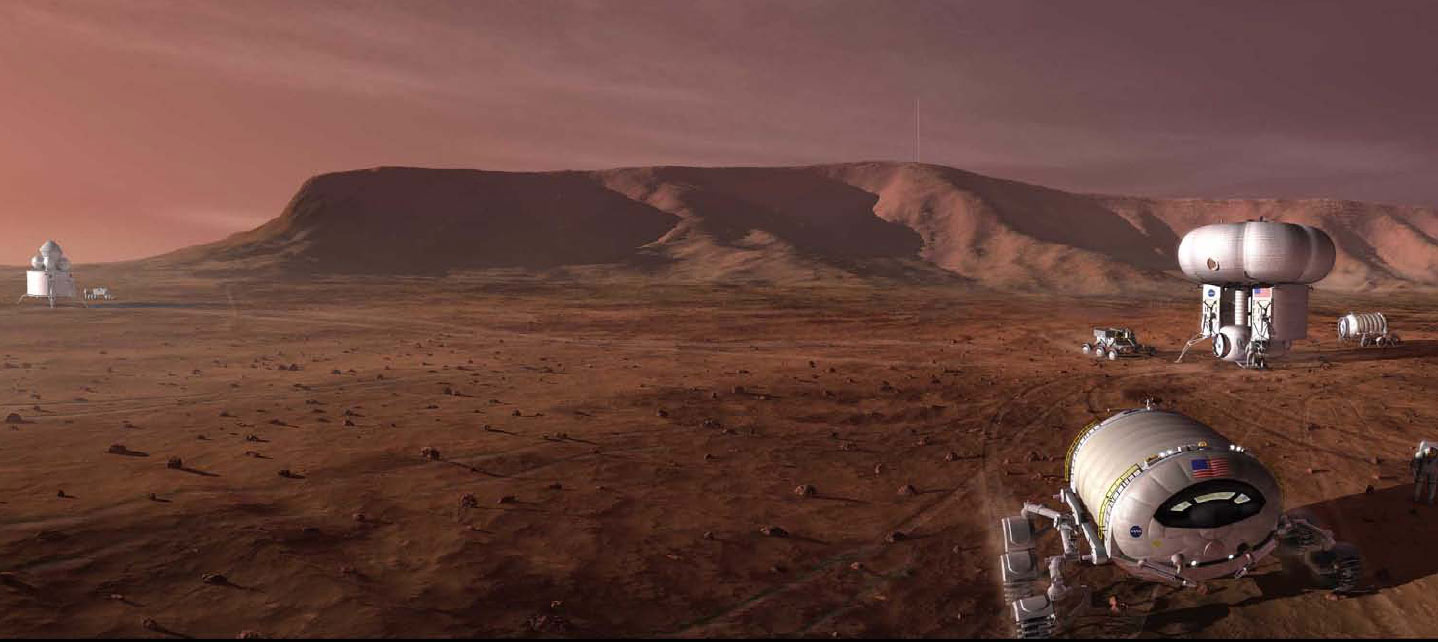

NEW YORK: The NASA missions of today are paving the way toward launching a manned mission to Mars by the 2030s, space agency officials said. The idea has been dubbed the High Altitude Venus Operational Concept.
HAVOC proposes that the manned mission would last for 30 days and include a crew of two astronauts. The mission would use a lighter-than-air ship to study the atmosphere and surface of Venus from an altitude of 50 kilometers, at which the pressure, gravity, density, and radiation levels are similar to those at Earth’s surface. The temperature at that altitude is 75 degrees Celsius, only 17 degrees warmer than the hottest temperature ever documented on Earth.
HAVOC faces several challenges to its fruition, including shielding the ship’s solar panels and structures from the Venusian atmosphere’s sulfuric acid, getting the airship to Venus and inflating it, and carrying out aerocapture maneuvers over Earth and Venus.
As reported by IEEE Spectrum, Venus also is attractive because it is usually much closer to Earth than Mars, the other serious contender for future manned missions. With existing for in-development propulsion systems, the roundtrip would require approximately 440 days, compared to between 650 and 900 for a roundtrip to Mars.
The first phase of HAVOC describes the use of unmanned robotic probes to reconnoiter in Venus’ atmosphere. This would be followed by a manned mission that would orbit Venus for 30 days. The 30-day manned atmospheric mission would be the next stage. Beyond that stage, the idea calls for a crew to spend a year floating in the atmosphere, and finally a permanent manned atmospheric installation.
“Venus has value as a destination in and of itself for exploration and colonization,” said Chris Jones of SMAB, who drew up the concept with colleague Dale Arney. “But it’s also complementary to current Mars plans.…There are things that you would need to do for a Mars mission, but we see a little easier path through Venus.”

Tesla driverless system to use updated radar technology
WASHINGTON: Electric carmaker Tesla announced Sunday it was upgrading its Autopilot software to use more advanced radar technology. In a...