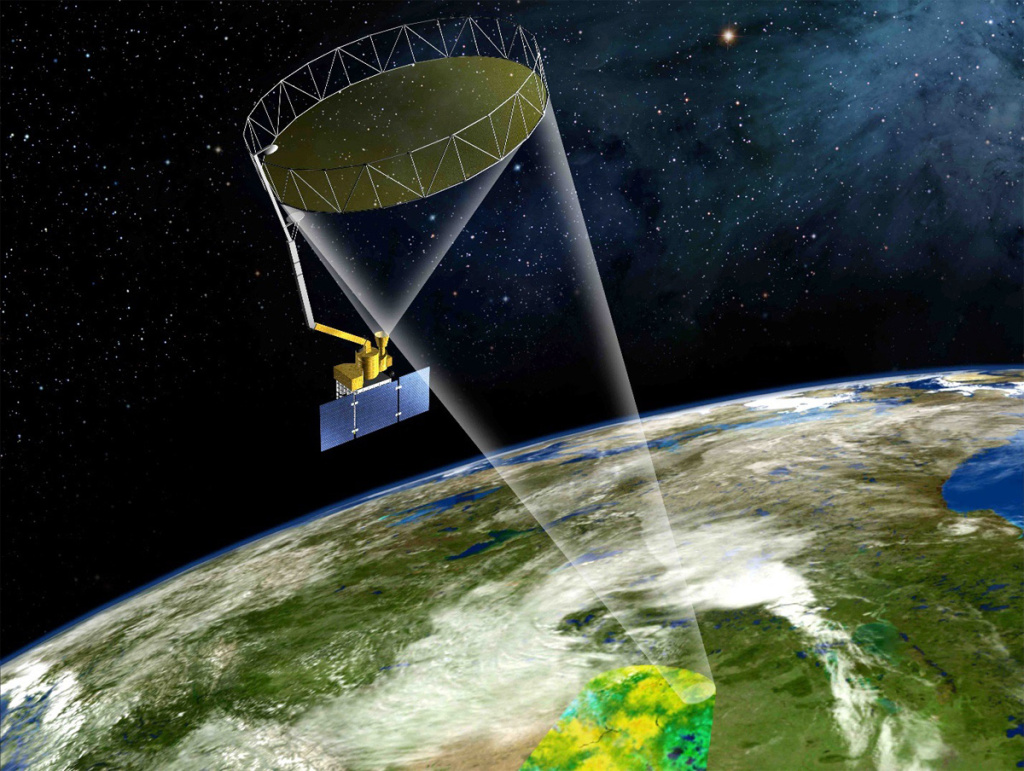

HONG KONG: The Soil Moisture Active Passive (Smap) satellite is set to launch later on January 29, 2015, giving researchers and chance to study and check droughts around the earth. Soil wetness levels around the world will be calculated by researchers using the latest space-bound observatory.
Soil moisture is a leading indicator of regional conditions and the overall severity of droughts. These levels of water in the ground also influence the way plants store and release carbon, and play a major role in flooding.
The water cycle of the Earth is usually thought of as a simple process of water evaporating from the ground, forming clouds, and falling back to the ground in the form of precipitation. However, the actual process, to be examined by Smap, is significantly more complex.
“For example, plants absorb water from the soil to grow but also “transpire” some of it straight back into the air. Animals drink water and eat plants, delivering water back to the ground where it may end up flowing to the ocean or be evaporated as the ground dries,” NASA officials stated on a Web page describing the mission.
The Smap observatory will record moisture levels in the top two inches of the Earth’s surface, covering the entire globe every 48 to 72 hours. Regular mapping by the satellite will allow researchers to study how droughts begin, spread around the globe, and eventually come to an end.
When water dries out of soil, it lowers the temperature of the ground, in much the same way that sweating cools the human body. These actions can alter precipitation patterns, and moisture levels in soil.
The satellite will launch into orbit aboard a Delta 2 rocket, on a three-year mission to better understand the water cycle and drought conditions. Liftoff of the $916 million mission will take place from Vandenberg Air Force Base.
The Smap observatory will have a resolution of just six miles, preventing detailed analysis of local drought activity. The satellite will be able to distinguish liquid water from ice, and readings will be taken from all regions which are not frozen.
The Smap satellite will orbit the Earth at an altitude of 426 miles, passing around the globe once every 98 minutes, 30 seconds.
“After SMAP launches, scientists will go through an extensive process to calibrate the radar measurement to actual soil moisture measurements at pre-selected sites around the world to assure the measurements are accurate under a wide variety of ground conditions,” Jet Propulsion Laboratory (JPL) reported.
With better understanding and mapping of soil moisture, mission planners hope flooding can be better-predicted, reducing damage.

Tesla driverless system to use updated radar technology
WASHINGTON: Electric carmaker Tesla announced Sunday it was upgrading its Autopilot software to use more advanced radar technology. In a...