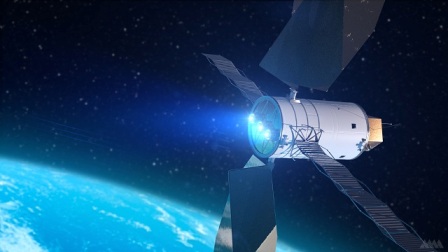

BRENT: NASA spacecraft Dawn is the first of its kind to go on a space mission using an electric ion engine instead of the contemporary rocket engines that were used in the past. This brand new type of ion engine is said to be part of the next generation of how space travel will be done.
The electric ion engine creates charged particles of fuel and then ramps up to a very high speed, while the older type of rocket engines could not get up to these high velocities due to the fact they are severely limited by their chemical style of fuel and they can only reach about five kilometers of thrust, while the newer electric ion engine is said to be able to reach between 15 and 35 kilometers of thrust.
These electric propulsion engines are also better at fuel efficiency in comparison to the old style of chemical rocket engines. It is estimated to cost about $20,000 for a single kilometer of thrusting power, so since the new ion electric engines can do this more effectively, they should cost less money to operate and use for future space travel and missions.
This will be an advantage for those that make things like satellites since this new type of electric ion engine can make it possible for their satellites to have new abilities. In fact, it is the only way that some types of scientific payloads can carry the appropriate kind of gear and travel long distances in space that require going outside of the solar system and beyond.
Three types of electrical ion engine power exist. These include electrothermal, electromagnetic, and electrostatic engines. The electrothermal engines employ electricity to heat up the fuel via a current going through the heating element.
Electromagnetic engines do this through an electric current that goes through the fuel and turns it into a plasma form that interacts with the electric current and magnets to work, while the electrostatic style of engine uses an electric field and high voltage to work when it traps electrons in its magnetic field.
The electric ion engine has finally mastered using electricity to work efficiently on long-distance space missions and is expected to be more valuable as time goes by and more missions are conducted by NASA or other agencies.

Tesla driverless system to use updated radar technology
WASHINGTON: Electric carmaker Tesla announced Sunday it was upgrading its Autopilot software to use more advanced radar technology. In a...