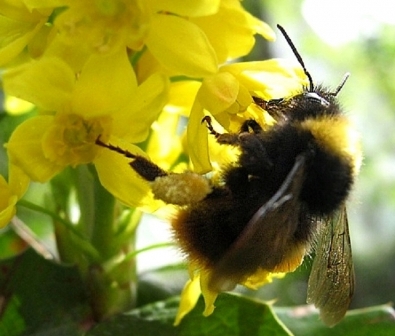

BRENT: According to new research, these natural plant toxins may also help bees to fend off parasites as well as reduce the likelihood that parasites will be past on to others in the hive.
The researchers found that bees infected with a common parasite saw a reduction of up to 81 percent, in the presence of the parasite within seven days of infection if they absorbed the plant toxins.
“We found that eating some of these compounds reduced pathogen load in the bumblebee’s gut, which not only may help the individual bees, but likely reduced the pathogen Crithidia spore load in their feces, which in turn should lead to a lower likelihood of transmitting the disease to other bees,” said University of Massachusetts – Amherst evolutionary ecologist Lynn Adler in a statement.
According to Adler growers who depend on pollinators may be able to improve bee health and population by planting pollinator friendly gardens and hedgerows with plants that produce the “herbal remedies”.
“The more we look, the more we see that these compounds are in nectar and pollen too. With so many people looking at bee health these days, it’s taken a long time for us to realize that perhaps we should be paying attention to how floral secondary compounds mediate pollinator dynamics and their interactions with pathogens. Having bees consume these protective chemicals could be a natural treatment of the future,” said Adler.
Anecdotally, some honeybee growers already use one of the chemicals, thymol which is found in thyme plants, to treat mite infestations.

Tesla driverless system to use updated radar technology
WASHINGTON: Electric carmaker Tesla announced Sunday it was upgrading its Autopilot software to use more advanced radar technology. In a...