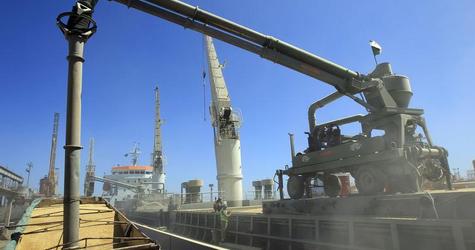
LAGOS: Nigeria lost over $83.3 billion between 1960 and 2011 through over-invoicing of imports and under-invoicing of exports, a senior official of the African Development Bank (ADB), Dr. Uosmane Dore, said in Lagos.
Dr Dore, a director of the regional bank, who disclosed this in a paper, “Diversifying Revenue Base of Nigerian Economy”, delivered at the 2015 Investiture of the Chartered Institute of Bankers (CIBN), also revealed that 65per cent of registered tax payers in the country have not filed their tax returns, while 30 per cent of companies abuse their tax exemption status.
According to him, 75 per cent of small and medium enterprises (SMEs) are currently not in the nation’s tax system.
Dore expressed concern that Nigeria’s tax revenue, at 7 per cent of the country’s gross domestic product (GDP), lags behind the emerging market average of 20 per cent.
The ADB chief quoted a study of the Federal Inland Revenue Service (FIRS) which showed there is a potential non-oil tax gap of $11 billion that can be captured.
He frowned at the continual dependence of the country on oil revenue and emphasized the need for Nigeria to diversify its revenue base in order to achieve revenue stability, improve fiscal performance and build resilience to risks.
He attributed federal government’s challenge in revenue diversification to, apart from the crude oil discovery, non-public consultation in crafting previous policies, weak physical and social infrastructure, limited expertise and capacity in specialized non-oil activities such as manufacturing, services. To broaden the tax net, Dore suggested the need to improve tax filing compliance by Company Income Tax and Value Added Tax payers.
He also recommended the need for the country to control tax exemption abuses, as well as expand the tax net to potential additional tax payers. The capacity of the Federal Inland Revenue Service to deal with illicit financial flows, he added, should be improved. Nigeria, he said, should consider raising VAT to 10 per cent from its current level of 5 per cent. “Currently, tax assignments/tax collections are dominated by the federal government. They should be revised so that the tax base at the lower tiers of government could be expanded and their dependence on allocations from the Federation Account reduced,” he added.

Singapore, Nigeria trade volume hits N846b
SINGAPORE: The trade volume between Nigeria and Singapore reached N846bn from 2011 to 2015, while the absolute balance of trade...