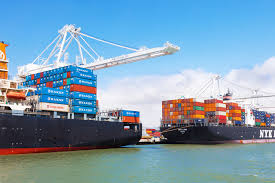
WASHINGTON: Containerized exports in May at the Port of Oakland increased 5.1 percent year-over-year. It was the fifth consecutive month of export gains, and a sign that U.S. exports are finally turning the corner after two years of declines. Oakland’s 83,969 laden 20-foot-equivalent export containers marked the highest monthly total since October 2014, according to the port’s website. “Export cargo is critical to our success,” said John Driscoll, maritime director. As the gateway to California’s rich agricultural Central Valley, Oakland usually records higher volumes of exports than imports.
Exports year-to-date are up 13.6 percent from the first five months of 2015, and so far this year, exports accounted for 52 percent of the port’s laden container volume. The Northern California port is a bellwether for U.S. containerized exports because the agricultural and scrap commodities that are shipped through Oakland are key export cargoes in the westbound U.S. trades with Asia.
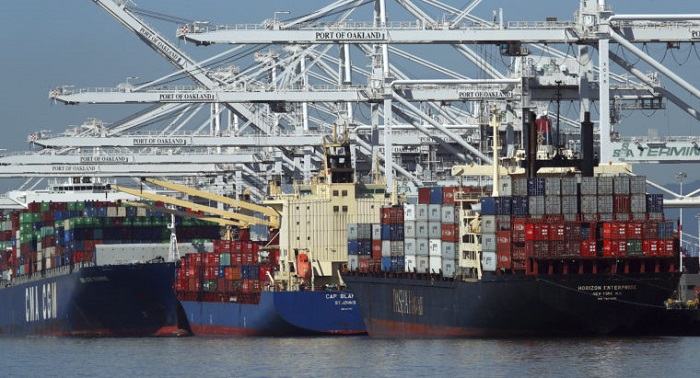

U.S. containerized exports were down in 2014 and 2015 because of the strong dollar, which makes export products more costly overseas, and because of the weak economies among many U.S. trading partners in Asia and Europe. However, the dollar has been gradually weakening in recent months, and the port indicated this development is helping to drive the export growth. JOC Economist Mario Moreno forecasts an increase of 4 percent in U.S. containerized exports this year.
Oakland also reported strong imports, up 13.6 percent from May 2015. Imports year-to-date through May are 12.3 percent higher than the same period last year. Total container volume, including laden exports and imports and empty containers being returned primarily to Asia, are up 8.4 percent year-to-date. oaIt appears Oakland has regained much of the market share lost in late 2014 through early 2015 during the West Coast port congestion and work slowdowns associated with the contract negotiations between the International Longshore and Warehouse Union and the Pacific Maritime Association.
Oakland now faces its own challenges of handling increasing cargo volumes. Outer Harbor Terminal in February announced its intention to leave the port by April 1. Since then about 90 percent of Outer Harbor’s container volume has shifted to Oakland International Container Terminal, which is operated by SSA Marine.
To help OICT handle the sudden surge in container volume, the port has been subsidizing night and weekend gates at its largest container terminal. Those subsidies will run out by the end of the month, but SSA announced this week that it will charge a fee of $30 on all laden containers to help fund night gates on Monday through Thursday each week. The shipper and trucker communities indicated support for this three-month trial program.