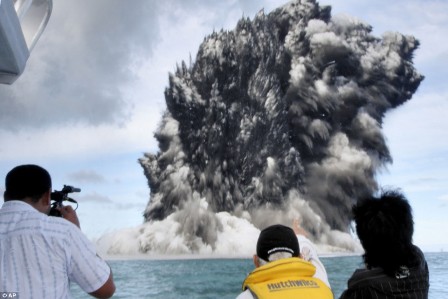
MEXICO: According to Edward Baker, “We don’t usually think of eruptions as being affected by very small changes-astronomical changes and sea levels rising and falling, and the Earth spinning around the sun at different distances. It’s another way of understanding how the Earth works.”
Baker is a scientist at the Joint Institute for the Study of Atmosphere and the National Oceanic and Atmospheric Administration.
According to study researcher Maya Tolstoy, a geologist, underwater volcanoes erupt every 100,000 years. Tolstoy was working on identifying frequencies of underwater volcanic eruptions and their causes and the relationship between the eruptions and low tides. One theory that they have is that underwater volcanic eruptions could have caused ice age and warming.
Based on their study, the researchers said that underwater volcanic eruptions erupt in sudden bursts, capable of lasting anywhere from two weeks to over 100,000 years in a very consistent pattern.


The researchers added that additional study might be needed to explore the effect of eruptions at mid-ocean ridges.
As Science Recorder reported, “The ice ages saw a rash of volcanic activity, as sea levels were considerably lower compared to today. Ice caps on the surface, due to the cold climate, added to volcanic pressure and suppressing land based eruptions. As the ice melted, more land volcanoes became active, releasing a great deal of carbon dioxide into the atmosphere and causing a warming effect.”