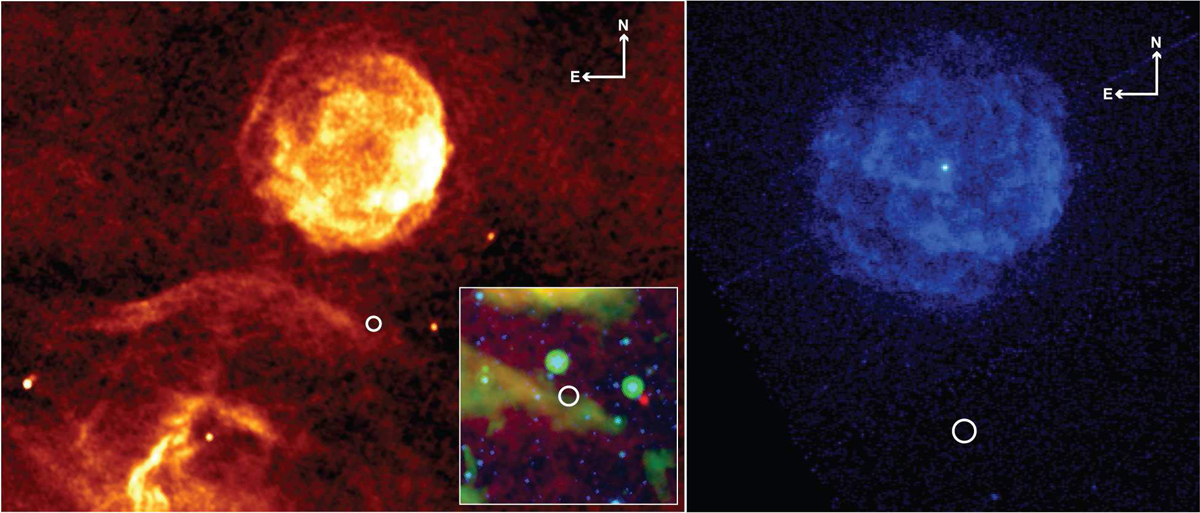

BRENT: The pulsar, one of the rotating “lighthouses” far-off in deep space has moved its visibility far from Earth’s sight due to a warp in space-time – this made the star to tilt its beams away from Earth until, perhaps, 2017.
The pulsar is a degenerate neutron star that is tiny or small but extremely dense and heavy; it rotates very fast and emits regular pulses of polarized radiation as it is locked in a tight orbit with another star – making the gravity between them to get so intense as to cause an emission of waves in a manner that makes the pulsar to wobble.
But after tracking its motion for five years and determining its weight, astronomers have been able to measure the extent of its gravitational emission – before it just disappeared from view. The reason for its disappearance is not known, but researchers believe it must have vanished into the dip in space-time that its own orbit created.
Being the collapsed remnant of a supernova, a pulsar according to Joeri van Leeuwen of the Netherlands Institute for Radio Astronomy (ASTRON), “They pack more mass than our Sun has in a sphere that’s only 10 miles across.” Dubbed Pulsar J1906, this particular pulsar suddenly appeared out of nowhere when Dr. van Leeuwen together with his associates were conducting a particular survey at the Arecibo Observatory in Puerto Rico.
“That was a real Eureka moment that night,” said van Leeuwen. “It was strange, because that part of the sky’s been surveyed lots of times – and then something really bright and new appears,” he added. But they were later to find that the pulsar was in the companion of a star, and that they circle each other every four hours in what later turned out to be the second fastest orbit; however, the pulsar spins seven times per second and each time this happens, it sweeps its two beams of radio waves across the space to Earth.

Tesla driverless system to use updated radar technology
WASHINGTON: Electric carmaker Tesla announced Sunday it was upgrading its Autopilot software to use more advanced radar technology. In a...