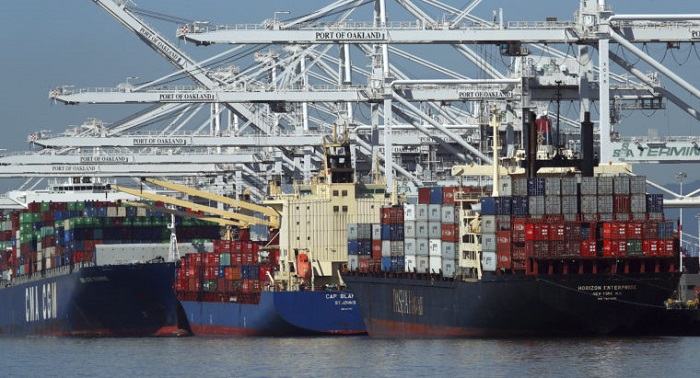
Significant congestion at deconsolidation points is delaying the inland distribution of containerized freight unloaded at West Coast ports, a regional trucking executive said.
West Coast ports may have cleared much of the congestion that built up during the recent labor dispute from port terminals but those containers are now being unloaded or transloaded at warehouses and distribution centers, and delays are still a problem along the West Coast, T.J. O’Connor, president of YRC Worldwide subsidiary Reddaway, said in an interview.

“They are getting containers as quickly as they can, but they’re not always able to process them,” O’Connor said April 30. “We’re still seeing significant yard congestion at the DCs. We’re holding trailers for some customers that aren’t able to process freight timely.”
Reddaway, based in Eugene, Oregon, is a less-than-truckload carrier near to the front lines in the West Coast port crisis, though not directly on them. The slowdown and gridlock in container traffic that set in after port labor talks stalled last fall affected the flow of goods from ports to warehouses to Reddaway’s LTL terminals and on to customers. Reddaway has 50 service centers in the West, with 15 terminals in California. Demand for expedited service from the West Coast has increased by double digits since the port crisis began.
O’Connor’s comments support claims by shippers at the NASSTRAC Shipper Conference in mid-April that much of the freight cleared from congested ports has yet to arrive at final destinations. The anticipated “surge” in shipments off the West Coast apparently is more a stream. “There’s a big emphasis on getting what’s available processed,” O’Connor said.
Containerized imports hit Reddaway’s less-than-truckload network after the ocean boxes have been hauled from ports to nearby inland sites, whether warehouses, distribution centers or truck terminals. That freight isn’t always ready for the next stage of its inland journey.
“When they get packages off the container, you’d be surprised” at their state, O’Connor said. “Sometimes the boxes are re-used, and are not properly tagged or marked, and that slows down the processing. Sometimes they have to go through a cross-dock operation.”
More needs to be done when containers are loaded overseas to transload goods quickly in the U.S., he said. “You have to ask, what can they do in Asia to facilitate the processing of freight at deconsolidation centers here? Is it packaged properly? Are the SKUs already applied? Some of the more sophisticated players do that, but it’s not always the case.”
Inefficient loading on the other side of the ocean simply generates more inefficiencies for warehouses, DCs and inland trucking operators such as Reddaway. “If we end up going empty or bobtailing in one direction or another, that creates inefficiencies for us,” O’Connor said. “LTL and truckload companies hauling freight inland “need to talk to customers and plan proactively what we can do to facilitate the processing of containers and getting freight into the system. There probably are things we can do differently from a supply chain standpoint.”
As for West Coast congestion, the ports may have broken the container logjam and cleared many, but there’s more to do. “There’s backlog out there yet,” O’Connor said.