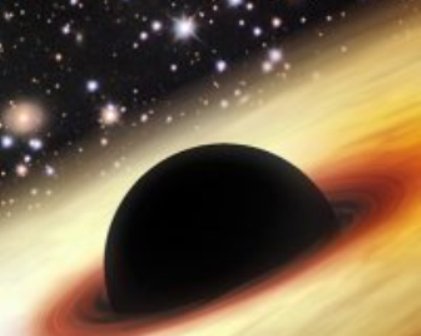

TORONTO: Astronomers have detected a black hole embedded in the spiral arm of a galaxy 100 million light-years from Earth — but this isn’t any old black hole, it belongs to an extremely elusive class that may be the ‘missing link’ in black hole evolution.
Using observational data from NASA’s Chandra X-ray Observatory and the European Very Long Baseline Interferometry (VLBI) Network, which detects radio waves from energetic sources in the cosmos, the researchers, led by Mar Mezcua of the Harvard-Smithsonian Center for Astrophysics, were able to also deduce that this particular ‘intermediate-mass black hole’ (IMBH) is creating a ‘dead zone’ inside its host galaxy, NGC 2276.
“In paleontology, the discovery of certain fossils can help scientists fill in the evolutionary gaps between different dinosaurs,” said Mezcua. “We do the same thing in astronomy, but we often have to ‘dig’ up our discoveries in galaxies that are millions of light years away.”

Tesla driverless system to use updated radar technology
WASHINGTON: Electric carmaker Tesla announced Sunday it was upgrading its Autopilot software to use more advanced radar technology. In a...