Customs Today
  • Home
  • Islamabad
  • Karachi
  • Lahore
  • National
  • Transfers and Postings
  • Chambers & Associations
  • Business
No Result
View All Result
Customs Today
  • Home
  • Islamabad
  • Karachi
  • Lahore
  • National
  • Transfers and Postings
  • Chambers & Associations
  • Business
No Result
View All Result
Customs Today
No Result
View All Result
Home Science & Technology Science

Researchers observe birth of planets

bySana Anwar
20/11/2015
in Science, Science & Technology
Share on FacebookShare on Twitter

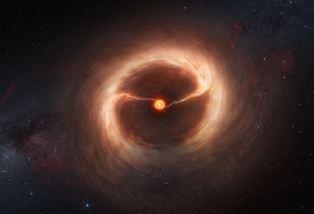
EUROPE: A team of researchers from the University of Arizona said they have been successful in capturing images of forming planets. They said this is the first time when anything like this has been captured directly.

Researchers in the study published Wednesday in the journal Nature detailed that they are very lucky that they got an opportunity to witness the planet formation. They also hope that their discovery can provide scientists with new insights on how planets actually form and how they are actually in their formative years.


You might also like

Tesla driverless system to use updated radar technology

12/09/2016

Apple to develop its own self-driving technology

10/09/2016

As per experts, so far almost 1,900 planets have been found in orbit around distant stars, but all those stars were grown up or mature stars. These mature planets are detected when they pass in front of the stars they orbit, which make their light dim.

As per study scientists, the infant or young stars are very small and volatile, therefore in order to view them directly they pointed their powerful telescopes toward young stars. They focus on the empty space around the stars, which they called the disk cavity.

Then in 2011 researchers finally found a possible protoplanet in the area around LkCa 15. It was a star which was estimated to be around 2 million years old and was almost 1,000 times less bright than LkCa 15.

The study lead author Stephanie Sallum, a graduate student at the University of Arizona used a technique called non-redundant masking (NRM) to get high-resolution images of the region surrounding the young star.


Related Stories

Tesla driverless system to use updated radar technology

byCT Report
12/09/2016

WASHINGTON: Electric carmaker Tesla announced Sunday it was upgrading its Autopilot software to use more advanced radar technology. In a...

Apple to develop its own self-driving technology

byCT Report
10/09/2016

SAN FRANCISCO: Apple may not become an automaker, but it still wants to develop its own self-driving technology. The iPhone-maker's...

NASA spots slowest known magnetar

byCT Report
10/09/2016

WASHINGTON: Astronomers have found evidence of a magnetar - magnetised neutron star - that spins much slower than the slowest...

‘YouTubers’ outshining old-school television

byCT Report
09/08/2016

SAN FRANCISCO: A media revolution is taking place, and most people over 35 years of age aren’t tuned in. Millennial...

Next Post
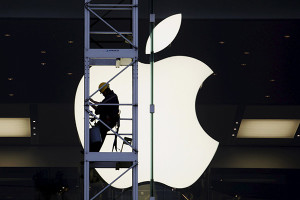
A worker climbs outside an Apple store in Hong Kong, in this April 10, 2013 file photo. China's "Great Firewall" may have been partly to blame for the first major attack on Apple Inc's App Store, but experts also point the finger at lax security procedures of some big-name Chinese tech firms and how Apple itself supports developers in its second biggest market. A malicious program, dubbed XcodeGhost, hit hundreds - possibly thousands - of Apple iOS apps, including products from some of China's most successful tech companies used by hundreds of millions of people. To match story APPLE-CHINA/CYBERSECURITY   REUTERS/Bobby Yip/Files

Apple to invest in 3 solar power plants in China

  • Terms and Conditions
  • Disclaimer

© 2011 Customs Today -World's first newspaper on customs. Customs Today.

No Result
View All Result
  • Transfers and Postings
  • Latest News
  • Karachi
  • Islamabad
  • Lahore
  • National
  • Chambers & Associations
  • Business
  • About Us

© 2011 Customs Today -World's first newspaper on customs. Customs Today.