Customs Today
  • Home
  • Islamabad
  • Karachi
  • Lahore
  • National
  • Transfers and Postings
  • Chambers & Associations
  • Business
No Result
View All Result
Customs Today
  • Home
  • Islamabad
  • Karachi
  • Lahore
  • National
  • Transfers and Postings
  • Chambers & Associations
  • Business
No Result
View All Result
Customs Today
No Result
View All Result
Home Uncategorized

Researches use satellites to calculate ocean acidification on global level

byCustoms Today Report
20/02/2015
in Uncategorized
Share on FacebookShare on Twitter

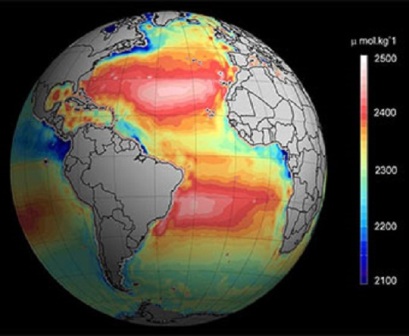
BEIJING:  International researchers are developing techniques to monitor the acidity of oceans from space, using satellites that can orbit the Earth up to 700 km above us in hard-to-reach areas, like the Arctic, much faster than before.

The researchers stated that the technology that can revolutionize the way marine biologists and climate scientists study the ocean. Using the new approach the researchers can remotely monitor large swathes of inaccessible ocean from satellites that orbit the Earth some 700 km above our heads.


You might also like

Pakistan to get $3b loan from Islamic Trade Financing Corporation

20/10/2024

Lahore I&I & Enforcement anti-smuggling operations achieve record success in early FY 2024-25

10/09/2024

Jamie Shutler, Senior Lecturer in Ocean Science at the University of Exeter and the lead researcher in the study, said, “Satellites are likely to become increasingly important for the monitoring of ocean acidification, especially in remote and often dangerous waters like the Arctic.”

“We are pioneering these techniques so that we can monitor large areas of the Earth’s oceans allowing us to quickly and easily identify those areas most at risk from the increasing acidification,” added Shutler.

The researchers stated that each year, more than a quarter of global CO2 emissions from burning fossil fuels and cement production are taken up by the Earth’s oceans. This process turns the seawater more acidic, making it more difficult for some marine life to live.

The rising CO2 emissions and the increasing acidity of seawater over the next century has the potential to devastate some marine ecosystems, which is a food resource on which we rely. Therefore, it is important to carefully monitor changes in ocean acidity.


Tags: ocean acidificationsatellites

Related Stories

Pakistan to get $3b loan from Islamic Trade Financing Corporation

byCT Report
20/10/2024

ISLAMABAD: Islamic Trade Financing Corporation (ITFC) to provide Pakistan with a $3 billion loan, according to an official statement released...

Lahore I&I & Enforcement anti-smuggling operations achieve record success in early FY 2024-25

byCT Report
10/09/2024

LAHORE:  Regional Directorate of Customs Intelligence & Investigation has demonstrated exceptional performance in the first two months of the fiscal...

ICCI and CDA to join hands for tree plantation drive in Capital

byQaisar Mansoor
09/08/2023

ISLAMABAD: Islamabad Chamber of Commerce and Industry (ICCI) in collaboration with the Capital Development Authority (CDA) would jointly launch a...

Customs Officials Yawar Abbas & Tariq Mehmood kidnapped in Karachi

byCT Report
08/07/2023

KARACHI: Customs Intelligence Officer Yawar Abbas and Customs Preventive Officer Tariq Mehmood who were working against smuggling were kidnapped by...

Next Post

How galaxy’s mysterious dark matter determines size of central black hole

  • Terms and Conditions
  • Disclaimer

© 2011 Customs Today -World's first newspaper on customs. Customs Today.

No Result
View All Result
  • Transfers and Postings
  • Latest News
  • Karachi
  • Islamabad
  • Lahore
  • National
  • Chambers & Associations
  • Business
  • About Us

© 2011 Customs Today -World's first newspaper on customs. Customs Today.