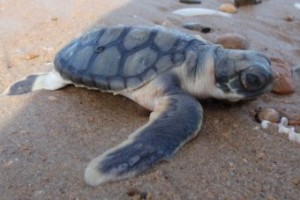


LONDON: Eggs submerged under seawater are less likely to hatch, study at world’s largest green turtle nesting site on the Great Barrier Reef shows
Rising sea levels could decimate sea turtle nesting sites around the world, scientists have warned, with the largest rookery site for green turtles increasingly at risk from being swamped by seawater.
Researchers have tested the impact of seawater upon turtle eggs in an attempt to find out why so few hatchlings were emerging on Raine Island, on the fringes of the Great Barrier Reef.
Raine Island is a remote coral cay that acts as the world’s largest nesting site for green turtles – as many as 100,000 female turtles can lay eggs in the sand each summer.
Scientists, concerned that only 10% of eggs are producing turtles, compared to 90% in other parts of the world, tested the effect of seawater upon the eggs.
They found that eggs submerged in seawater for up to six hours had far less chance of hatching, due to the need for embryos to gather oxygen from the surrounding environment to avoid suffocating.
Given that low-lying Raine Island is regularly hit by king tides and storms, the researchers warned that rising sea levels would prove highly problematic for turtle species on the island and around the world.

Pakistan to get $3b loan from Islamic Trade Financing Corporation
ISLAMABAD: Islamic Trade Financing Corporation (ITFC) to provide Pakistan with a $3 billion loan, according to an official statement released...