

Customs Today
  • Home
  • Islamabad
  • Karachi
  • Lahore
  • National
  • Transfers and Postings
  • Chambers & Associations
  • Business
No Result
View All Result
Customs Today
  • Home
  • Islamabad
  • Karachi
  • Lahore
  • National
  • Transfers and Postings
  • Chambers & Associations
  • Business
No Result
View All Result
Customs Today
No Result
View All Result
Home Science & Technology Science

Rosetta executing series of flybys at various altitudes to learn more about comet

byCustoms Today Report
08/04/2015
in Science, Science & Technology
Share on FacebookShare on Twitter

You might also like

Tesla driverless system to use updated radar technology

12/09/2016

Apple to develop its own self-driving technology

10/09/2016

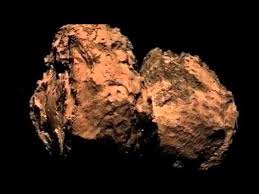
MEXICO: Modern deep space probes may be among the most sophisticated pieces of hardware the 21st century can produce, but that doesn’t mean they aren’t susceptible to the age-old problem of dust. The European Space Agency’s (ESA) Rosetta space probe was thrown into safe mode recently when it was unable to take a simple star fix due to comet dust.
Since it left orbit around comet 67P/Churyumov–Gerasimenko, Rosetta has been executing a series of flybys at various altitudes to learn more about the comet as it approaches the Sun. On March 28, it came within 14 km (8.6 mi) of the surface when it had problems navigating and began to lose its radio link with Earth, which resulted in the spacecraft going into safe mode.
According to ESA, the cause was Rosetta’s star trackers. These are standard equipment on spacecraft, which use them to orient themselves. Since a compass is useless in deep space and gyros tend to drift, space probes keep on the straight and narrow by taking sightings on the stars in a manner that any mariner of the 18th century would understand. By identifying various key stars and triangulating their positions, a spacecraft can calculate its trajectory and its attitude.
Star trackers have been a reliable technology for half a century, but comets set challenges that make them much less so. As Rosetta flew close to 67/P, the dust particles blown away from the comet caught the sunlight and appeared to the trackers as stars. This confused them and the Attitude and Orbit Control and Measurement Subsystem couldn’t lock onto the target stars and keep Rosetta on course or aim the high-gain antenna properly at Earth.

Tags: Orbit ControlRosetta executing series of flybysRosetta space probeuropean Space Agencyvarious altitudes to learn more about comet

Related Stories

Tesla driverless system to use updated radar technology

byCT Report
12/09/2016

WASHINGTON: Electric carmaker Tesla announced Sunday it was upgrading its Autopilot software to use more advanced radar technology. In a...


Apple to develop its own self-driving technology

byCT Report
10/09/2016

SAN FRANCISCO: Apple may not become an automaker, but it still wants to develop its own self-driving technology. The iPhone-maker's...

NASA spots slowest known magnetar

byCT Report
10/09/2016

WASHINGTON: Astronomers have found evidence of a magnetar - magnetised neutron star - that spins much slower than the slowest...

‘YouTubers’ outshining old-school television

byCT Report
09/08/2016

SAN FRANCISCO: A media revolution is taking place, and most people over 35 years of age aren’t tuned in. Millennial...

Next Post

NEW YORK: The new, fourth-generation 2016 Lexus RX gets a dramatic styling evolution, adopting the company's most recent design language and gaining a strong resemblance to its smaller brother, the compact Lexus NX. The angular, origami-style bodywork is quite striking, while the roofline has been lowered for a more streamlined profile. The F SPORT appearance and trim package will be offered as an option, and for the first time, it can be selected with the hybrid version. Once again, the RX will boast a choice of two power trains. The RX 350's 3.5L V6 has been revised with direct injection, and according to Lexus, it will produce an estimated 300 horsepower. The gasoline engine will be mated to an eight-speed automatic transmission. The hybrid RX 450h mixes an Atkinson-cycle 3.5L V6 with an electric motor for a total combined output of about 300 hp also. The 2016 Lexus RX is said to offer enhanced driving dynamics, thanks to chassis tuning, body structure strengthening as well as an option Adaptive Variable Suspension system, which monitors shock absorber damping and steering while aiming to reduce body lean in corners. Obviously, all-wheel drive will be standard in Canadian-spec versions. Inside, fit and finish is up to par with the brand's recent products. Rear-seat occupants gain more leg and knee room while benefitting from available outboard heated seats, a panoramic sunroof, a dual-screen entertainment system and power-folding 60/40 split seatbacks. The 2016 Lexus RX 350 and RX 450h will be on sale later this year.

  • Terms and Conditions
  • Disclaimer

© 2011 Customs Today -World's first newspaper on customs. Customs Today.

No Result
View All Result
  • Transfers and Postings
  • Latest News
  • Karachi
  • Islamabad
  • Lahore
  • National
  • Chambers & Associations
  • Business
  • About Us

© 2011 Customs Today -World's first newspaper on customs. Customs Today.