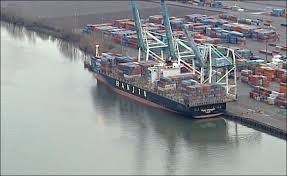
SEOUL: South Korean shipping company has been unhappy with the operation of the port for some time. Two years ago it said it would pull out, but port officials sweetened its deal and it stayed on. Apparently the port’s inability to quickly offload and reload ships made Hanjin’s Portland operation unviable.
The South Korean shipping company is the Port of Portland’s largest container carrier. It handles nearly 80 percent of the container volume at the port’s Terminal 6. It will terminate its service with the city on March 9, but it will continue to use rail and truck transportation, port officials said


In recent years farmers have benefited greatly from the export market. The growing Chinese middle class is hungry for U.S. farm products, as are South Korea and Japan. These are markets West Coast producers are ideally situated to serve. The trans-Pacific container ships sailing from Portland have been a boon to farmers and processors, not just in the Willamette Valley and other adjacent areas, but also up the Columbia River Basin and the Port of Lewiston on the Snake River. Raw farm commodities — hay, onions, peas, grass seed, potatoes, Christmas trees — and processed products, such as french fries, are barged downriver and transferred at the port for shipment to Asia.
A slowdown at West Coast ports in recent months as part of a labor dispute between port operators and longshoremen have disrupted this trade, causing farmers and processors to lose sales. Still, some shipments are getting through. Over the weekend, President Obama waded in, sending his secretary of labor to determine what, if anything, can be done to expedite an agreement. But Hanjin’s decision will effectively eliminate export opportunities for some agricultural products, experts say. While ports in Seattle and Tacoma remain viable options for some ag exporters, the extra cost of shipping to those sites will be prohibitive to others. Those producers and processors will have to look for other markets, other commodities. Some won’t survive.
We agree with Bill Wyatt, the port’s executive director, who described Hanjin’s decision as a “very devastating blow.” The port and its operator, ICTSI Oregon, blame work slowdowns by the International Longshore and Warehouse Union, while longshoremen claim inadequate equipment and safety concerns are causing the problem. Potayto, potahto. The damage is done. If the ongoing slowdowns at the other ports aren’t soon addressed, we fear far more devastating blows.