
Customs Today
  • Home
  • Islamabad
  • Karachi
  • Lahore
  • National
  • Transfers and Postings
  • Chambers & Associations
  • Business
No Result
View All Result
Customs Today
  • Home
  • Islamabad
  • Karachi
  • Lahore
  • National
  • Transfers and Postings
  • Chambers & Associations
  • Business
No Result
View All Result
Customs Today
No Result
View All Result
Home Science & Technology Science

Scientists create material that have potential to clean up oil spills

bySana Anwar
04/12/2015
in Science, Science & Technology
Share on FacebookShare on Twitter

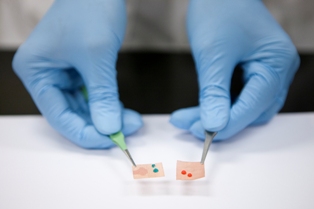
WASHINGTON: Call it a super sponge or a magic product – scientists from Deakin University in Australia have created a material that potentially cleans up oil spills. This discovery is promoted beneficial in disasters like the 2010 BP oil spill on the Gulf Coast, which massively hit the environment and cost about $40 billion in damages.

The material, said to absorb oil like how a sponge does, will not be on its trial phase after two years of laboratory work.


You might also like

Tesla driverless system to use updated radar technology

12/09/2016

Apple to develop its own self-driving technology

10/09/2016

“Oil spills are a global problem and wreak havoc on our aquatic ecosystems, not to mention cost billions of dollars in damage,” said Professor Ying Chen, lead author of the study published Nov. 30 in the journal Nature Communications.

He said the Gulf Coast disaster in 2010 that rocked the world is “a regular problem” in Australia not just in waters, but also in freeways affected by oil spill from vehicles such as trucks. These translate to staggering economic losses, Chen added.

According to him, current oil spill cleanup methods are inefficient, unsophisticated, time-consuming, and causes costly, ongoing damage. This prompted the Australian Research Council to support the initiative.

The first stage of producing the material involved a powder form, which also has absorption abilities. But the powder needed to be bound into a sponge to get the oil soaked up and separate it from water.

According to Dr. Weiwei Lei, lead author of the paper, this was a major challenge they addressed through utilizing a new production method: using a boron nitride nanosheet composed of nanometers-thick flakes with small holes.

“[These holes] can increase its surface area per gram to effectively the size of 5.5 tennis courts,” Dr. Lei explained, with the team breaking “white graphite” or boron nitride powder into atomically thin sheets used to create the sponge.


Related Stories

Tesla driverless system to use updated radar technology

byCT Report
12/09/2016

WASHINGTON: Electric carmaker Tesla announced Sunday it was upgrading its Autopilot software to use more advanced radar technology. In a...

Apple to develop its own self-driving technology

byCT Report
10/09/2016

SAN FRANCISCO: Apple may not become an automaker, but it still wants to develop its own self-driving technology. The iPhone-maker's...

NASA spots slowest known magnetar

byCT Report
10/09/2016

WASHINGTON: Astronomers have found evidence of a magnetar - magnetised neutron star - that spins much slower than the slowest...

‘YouTubers’ outshining old-school television

byCT Report
09/08/2016

SAN FRANCISCO: A media revolution is taking place, and most people over 35 years of age aren’t tuned in. Millennial...

Next Post

South Korean stocks retreat at open, KOSPI plummets 14.35pts

  • Terms and Conditions
  • Disclaimer

© 2011 Customs Today -World's first newspaper on customs. Customs Today.

No Result
View All Result
  • Transfers and Postings
  • Latest News
  • Karachi
  • Islamabad
  • Lahore
  • National
  • Chambers & Associations
  • Business
  • About Us

© 2011 Customs Today -World's first newspaper on customs. Customs Today.