Customs Today
  • Home
  • Islamabad
  • Karachi
  • Lahore
  • National
  • Transfers and Postings
  • Chambers & Associations
  • Business
No Result
View All Result
Customs Today
  • Home
  • Islamabad
  • Karachi
  • Lahore
  • National
  • Transfers and Postings
  • Chambers & Associations
  • Business
No Result
View All Result
Customs Today
No Result
View All Result
Home Science & Technology Science

Scientists found eight fossilized peach pits from China

bySana Anwar
04/12/2015
in Science, Science & Technology
Share on FacebookShare on Twitter

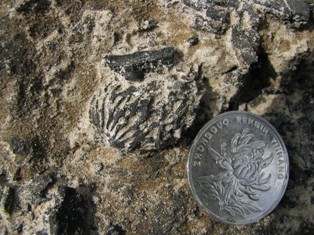
BEIJING: A team of scientists found eight fossilized peach pits or endocarps in the southwestern part of China, with the endocarps dating back over 2.5 million years. The striking observation: the fossils appeared almost identical to peach pits today.

The study, published in Scientific Reports, found that the peach fruit had evolved via natural selection as suggested by the discovered fossilized peach pits.


You might also like

Tesla driverless system to use updated radar technology

12/09/2016

Apple to develop its own self-driving technology

10/09/2016

Co-author and paleobotany professor Peter Wilf of Penn State University emphasize the importance of peaches in human history. “If we know the origins of our resources we can make better use of them,” he said.

Lead author Tao Su discovered the fossilized peach pits near his Kunming home, when road construction revealed a late-Pliocene rock outcrop. The pits were exposed in the strata, he recalled.

Peaches have been widely believed to have emerged from China, with the oldest proof of archeological data from 8,000 years back. The lack of wild peach population and its long trading history makes accounting for its origins difficult.

The fossils’ discovery supports the notion that peaches emerged from China, where it remains culturally important and a testament to the Asian country’s human colonization, said Wilf. Animals and early hominids feasted on peaches, and much later they were bred when modern humans came into the picture.

Wilf believed that the peaches of today are a combination of artificial agricultural breeding and evolution through natural selection.

The fossilized peach’s analysis revealed that they are older than radiocarbon dating’s limit, which is around 50,000 years. The team also estimated that the ancient finds had a diameter of about 5 centimeters (a little less than 2 inches) during the late Pliocene.

“If you imagine the smallest commercial peach today, that’s what these would look like, ” Wilf said, adding that it would have had a fleshy and edible fruit surrounding it and must have tasted quite delicious.


Related Stories

Tesla driverless system to use updated radar technology

byCT Report
12/09/2016

WASHINGTON: Electric carmaker Tesla announced Sunday it was upgrading its Autopilot software to use more advanced radar technology. In a...

Apple to develop its own self-driving technology

byCT Report
10/09/2016

SAN FRANCISCO: Apple may not become an automaker, but it still wants to develop its own self-driving technology. The iPhone-maker's...

NASA spots slowest known magnetar

byCT Report
10/09/2016

WASHINGTON: Astronomers have found evidence of a magnetar - magnetised neutron star - that spins much slower than the slowest...

‘YouTubers’ outshining old-school television

byCT Report
09/08/2016

SAN FRANCISCO: A media revolution is taking place, and most people over 35 years of age aren’t tuned in. Millennial...

Next Post

China stocks decline at noon, Shanghai Composite dips 1.2pc

  • Terms and Conditions
  • Disclaimer

© 2011 Customs Today -World's first newspaper on customs. Customs Today.

No Result
View All Result
  • Transfers and Postings
  • Latest News
  • Karachi
  • Islamabad
  • Lahore
  • National
  • Chambers & Associations
  • Business
  • About Us

© 2011 Customs Today -World's first newspaper on customs. Customs Today.