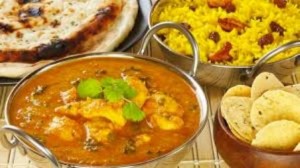


WASHINGTON: Scientists at the Indian Institute for Technology in Jodphur crunched data on several thousand recipes in order to determine what makes Indian food so enjoyable, and their findings revealed that Indian dishes differentiate themselves from Western schools of cooking by utilizing more radical flavor pairings at the molecular level.
As a rule of thumb, most dishes that follow Western culinary ideologies combine similar flavors, which chemists have broken into their molecular parts. The different chemical compounds interact at the molecular level to provide us with the distinct flavors we enjoy.
According to The Washington Post, the average, single food ingredient contains just over 50 flavor compounds, and flavor overlapping is not always perfectly intuitive: “strawberries, for instance, have more in common with white wine than they do with apples, oranges or honey.”
While chefs in the West follow a trend of combining ingredients with correlating flavors, the researchers at IIT in Jodphur have revealed that Indian food achieves its unique palette by doing just the opposite. After breaking a slew of Indian dishes down to their ingredients and comparing flavor compounds, they realized Indian food contains a negligible amount of flavor overlap.
In fact, after crunching the data for 2,500 recipes — which used 200 of the 381 observed culinary ingredients of the world — the scientists found Indian fare tends to mix components whose flavors don’t overlap at all.
The study also found that the uniqueness of Indian cooking can be observed in some dishes more than others, and seemed to be tied specifically to the use of certain ingredients. The IIT data crunchers reported that spices usually indicated a dish with flavors that harbored no chemical commonalities.

Pakistan to get $3b loan from Islamic Trade Financing Corporation
ISLAMABAD: Islamic Trade Financing Corporation (ITFC) to provide Pakistan with a $3 billion loan, according to an official statement released...