
Customs Today
  • Home
  • Islamabad
  • Karachi
  • Lahore
  • National
  • Transfers and Postings
  • Chambers & Associations
  • Business
No Result
View All Result
Customs Today
  • Home
  • Islamabad
  • Karachi
  • Lahore
  • National
  • Transfers and Postings
  • Chambers & Associations
  • Business
No Result
View All Result
Customs Today
No Result
View All Result
Home Science & Technology Science

Scientists treat mice of retrograde amnesia with blue light

byCustoms Today Report
03/06/2015
in Science, Science & Technology
Share on FacebookShare on Twitter

You might also like

Tesla driverless system to use updated radar technology

12/09/2016

Apple to develop its own self-driving technology

10/09/2016

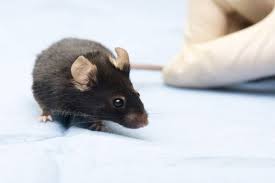
PARIS: Scientists report they’ve successfully recovered “lost memories” from mice using just light, suggesting memories lost in retrograde amnesia because of brain injuries aren’t gone but rather have become “hidden.”
At the Massachusetts Institute of Technology researchers say they’ve recovered memories in mice by using pulses of blue light to stimulate neurons in their brains, evidence that memories believed destroyed in certain kinds of amnesia still exist, undamaged but inaccessible.
In an laboratory experiment, mice in a cage were given a small electric shock, the memory of which made them freeze out of fear in anticipation of receiving an additional shock when they were returned to the same enclosure later.
The experiment was then repeated, but the mice were administered a drug that prevented the consolidation of the memory. They displayed no similar signs of fear when returned to the cage as their memories of the disagreeable shock appear to have been completely “lost.”
However, the researchers say they were able to restore that fear memory using a technique called optogenetics to directly stimulate the neurons where the memory was encoded, which caused the mice to suddenly revert to their “fear-based” behavior – they now remembered the shock experience.
In optogenics, researchers can target individual neurons in the brain and use an engineered virus to tag them with a special protein that makes them sensitive to light.

Related Stories

Tesla driverless system to use updated radar technology

byCT Report
12/09/2016

WASHINGTON: Electric carmaker Tesla announced Sunday it was upgrading its Autopilot software to use more advanced radar technology. In a...


Apple to develop its own self-driving technology

byCT Report
10/09/2016

SAN FRANCISCO: Apple may not become an automaker, but it still wants to develop its own self-driving technology. The iPhone-maker's...

NASA spots slowest known magnetar

byCT Report
10/09/2016

WASHINGTON: Astronomers have found evidence of a magnetar - magnetised neutron star - that spins much slower than the slowest...

‘YouTubers’ outshining old-school television

byCT Report
09/08/2016

SAN FRANCISCO: A media revolution is taking place, and most people over 35 years of age aren’t tuned in. Millennial...

Next Post

Astronomers discover ancient terrestrial exoplanets around neighboring star

  • Terms and Conditions
  • Disclaimer

© 2011 Customs Today -World's first newspaper on customs. Customs Today.

No Result
View All Result
  • Transfers and Postings
  • Latest News
  • Karachi
  • Islamabad
  • Lahore
  • National
  • Chambers & Associations
  • Business
  • About Us

© 2011 Customs Today -World's first newspaper on customs. Customs Today.