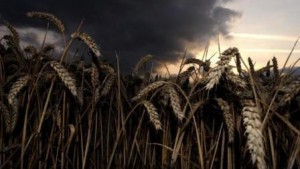

NEW YORK: Scientists at the University of Western Australia say they have uncovered how wheat will respond to potential climate changes.
It is hoped this research will allow wheat breeders to develop plant cultivars to get better yields from hotter, drier wheat growing regions.UWA Institute of Agriculture Professor Kadambot Siddique supervised the research.
He said the study looked at plants under combined conditions of higher temperatures, water stress and higher levels of carbon dioxide in varying situations.
“What is new about our study is we have looked at the interactive effect of elevated CO2, high temperature and water stress from flowering, what we call terminal drought, the interactive effect on growth and yield on a number of wheat lines,” he said.
“Our hypothesis is that when you supply high CO2, the plants love it, they produce more green area, they make good photosynthesis, they produce more dry matter and so on.
“So we got very good yield, anything between 30 to 50 per cent more biomass and yield when there was plenty of water, no problem with the plant with high CO2.
“But when we gave water stress at flowering, yield had gone down nearly 50 per cent less than the control.
“So what we found was when we water stress the plants at flowering onwards, then we put the elevated CO2 and a temperature of two or three degrees higher than the ambient, the negative effects of water stress was minimized. In other words, the combination of the elevated CO2 and slightly higher temperature was able to reduce the negative effect of drought.”
Professor Siddique said this information would allow wheat breeders to produce varieties that were better suited to a warmer and drier wheatbelt with higher carbon dioxide levels.

Tesla driverless system to use updated radar technology
WASHINGTON: Electric carmaker Tesla announced Sunday it was upgrading its Autopilot software to use more advanced radar technology. In a...