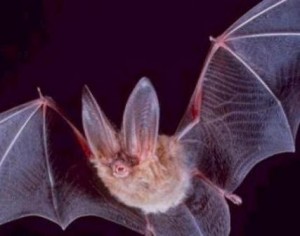

WASHINGTON: Bats fly with breathtaking precision because their wings are equipped with highly sensitive touch sensors, cells that respond to even slight changes in airflow, scientists say.
Researchers from Johns Hopkins University, as well as Columbia University and the University of Maryland, determined how the sense of touch plays a key role in powered flight.
In a paper published in the journal Cell Reports, they showed how sensory receptors in bat wings send information about airflow to neurons in the brain, enabling the bat to make split-second flight control adjustments.
“Until now no one had investigated the sensors on the bat’s wing, which allow it to serve as more than a propeller, a flipper, an airplane wing or any simple airfoil,” said Johns Hopkins neuroscientist Cynthia F Moss.
“These findings can inform more broadly how organisms use touch to guide movement,” Moss said.
Moss and the team studied the big brown bat, a common species found throughout North America. Bats are the only mammals capable of true powered flight, able to reach speeds of 7 to 20 mph with the sort of aerial manoeuvrability humans only wish they could engineer.

Tesla driverless system to use updated radar technology
WASHINGTON: Electric carmaker Tesla announced Sunday it was upgrading its Autopilot software to use more advanced radar technology. In a...