NEW YORK: Life in the oceans is at imminent risk of the worst spate of extinctions in millions of years. Researchers have analyzed the data from hundreds of sources and have found clear signs that ocean life could face mass extinction because of human activities.
Douglas J. McCauley, an ecologist at the University of California, Santa Barbara, and an author of the new research, said, “The situation is rapidly declining. However, there is still time left to stop the potential disaster. When compared with the continents, the oceans are mostly intact, and still strong enough to bounce back to good ecological health.”


Researchers from the University of California, Santa Barbara, sought a clearer picture of the oceans’ health by collecting data from various types of sources. These sources included statistics on modern container shipping, discoveries in the fossil record, seabed mining and fish catches. While many of the findings already existed, they had never been mixed together in a study in such a manner.
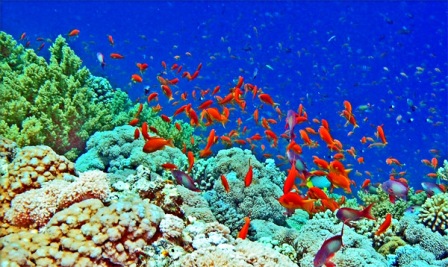
The researchers found clear signs of massive damages to ocean and its wild life, because of human activity. Some ocean species were overharvested, but even greater damage results from large-scale habitat loss, which is likely to accelerate as technology advances the human footprint. For example, coral reefs have declined by 40% worldwide, partly as a result of climate change, which is accelerated by global warming.
They also found that fragile ecosystems such as mangroves are being replaced by fish farms, which are projected to provide most of the fish we consume for the next 20 years. Bottom trawlers scraping large nets across the sea floor have already affected 20 million square miles of ocean, turning parts of the continental shelf into rubble.