COLOMBIA: Hundreds of smugglers cross into Colombia each night supplying a $3 billion a year black market that has contributed to product shortages in Venezuela.
As Venezuela’s currency crashes and market prices plummet, the incentive grows to smuggle cheap goods into Colombia.


Trujillo, 29, says most Venezuelan contraband has historically been gasoline, which currently sells for less than 1 cent a gallon in Venezuela but $2 a gallon in Colombia. Corn flour has also been a popular black-market item because it’s subject to price controls in Venezuela and costs 10 times more in Colombia.
But now, with the Venezuelan bolivar worth just one-twentieth what it was worth two years ago against the dollar, smugglers are diversifying their offering with a sundry of shampoos, baby formula, booze, rice, beef, poultry and toothpastes.
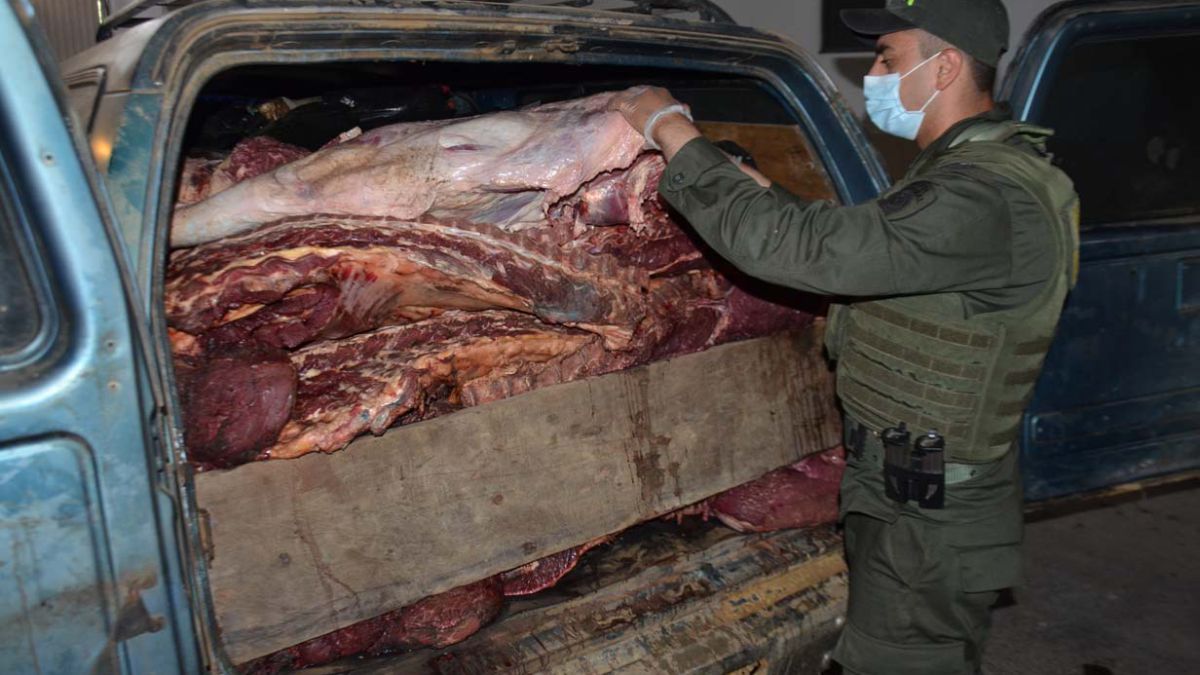
A taxi is caught trying to smuggle beef from Venezuela into Colombia, Jan 19 Ivan Antonio/Colombia Customs Police
Powdered milk and baby formula are frequently smuggled from Venezuela into Colombia where these products can sell for ten times as much. Ivan Antonio/Colombia Customs Police
Supermarket shelves in Venezuela lack powdered milk and baby formula but in Colombia it can easily be found. Manuel Rueda/Fusion
“You come here into Colombia, and you find Venezuelan products everywhere,” Maribel Cruz, a housewife from the Venezuelan city of San Cristobal said during a recent visit to Cucuta, a Colombian border tAttachment-1own.
Cruz, 37, says products that were once affordable on supermarket shelves in Venezuela are now sold at marked-up prices on the Colombian side. For example, Cruz says, the same bottle of shampoo that she used to buy in Venezuela for 37 bolivars ($.20) now sells for $6 in Colombia, making it unaffordable on her husband’s salary of around $60 a month as an auto mechanic in Venezuela.
“The supermarkets there are very empty, and you have to do long lines when something is available,” Cruz said. “We’re only getting shampoo in small envelopes now, and when there is none we just go without…I’m just washing my hair once every four days now.”
That’s just one of many products with massive price disparities on opposite sides of the border. Corn flour, which sells for 19 bolivares ($.08) in Venezuela, sells for ten times as much in Colombia. The same is true for a box of cereal, which sells for $.40 in Venezuela and $4 in Colombia.
A kilo of powdered milk which goes for $6 in Colombia’s open market, sells for around 25 cents in Venezuela’s price-controlled socialist economy — when it can be found, that is. “We haven’t had it since September,” said an attendant at the Cosmos supermarket in Ureña, Venezuela.
Wages are also much higher in Colombia, which means people there have more money to spend on smuggled Venezuelan goods. Colombia’s monthly minimum wage is about $257, more than 10 times that in Venezuela, where at the current exchange rate the minimum wage comes out to around $21 a month.