Customs Today
  • Home
  • Islamabad
  • Karachi
  • Lahore
  • National
  • Transfers and Postings
  • Chambers & Associations
  • Business
No Result
View All Result
Customs Today
  • Home
  • Islamabad
  • Karachi
  • Lahore
  • National
  • Transfers and Postings
  • Chambers & Associations
  • Business
No Result
View All Result
Customs Today
No Result
View All Result
Home International Customs

Solar Power to develop 500 megawatts of photovoltaics in Japan

byCustoms Today Report
29/05/2015
in International Customs, Japan
Share on FacebookShare on Twitter

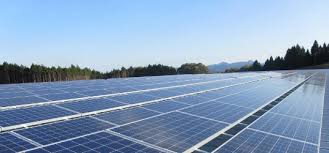
TOKYO: Solar Power Inc. on Tuesday announced a joint venture agreement with a Japanese company to develop more than 500 megawatts of solar photovoltaic power projects in Japan. The work will be done by Solar Power and subsidiary SPI Solar Japan G.K. with Japanese company K.K. Uniroot of Osaka, Japan.

Solar Power Inc. primarily will be responsible for project funding, construction and materials. K.K. Uniroot will buy or lease land, secure permits and sign power purchase agreements with utilities. Solar Power, also known as SPI Solar, will have at least 51 percent equity interest in the joint venture. 500 megawatts is a huge amount of solar photovoltaic. Anything over about 3 megawatts is considered utility scale.

You might also like

lamic banking assets reach Rs14.47 trillion, sector share rises to 23%

07/03/2026

Shippers see temporary lull in exports

05/02/2020

As a reference, the largest photovoltaic array in Sacramento County is a 6-megawatt array completed by SPI in 2010 on the Rancho Cordova campus of Aerojet Rocketdyne. A 7-megawatt array is now being developed on 32 acres of land at Sacramento International Airport. In the string of deals SPI announced last year and so far this year, most were utility scale projects of around 20 megawatts each.

Japan has been developing solar power aggressively since the 1990s, and even more so since the Fukushima Daiichi nuclear disaster in March 2011 when the country actively began moving away from its dependence on nuclear energy.

Being an island nation, Japan can’t share electricity with its neighbors, so it is moving toward more solar. From its legacy of nuclear, Japan has a network of pumped storage projects, and those can be used to store excess solar energy for nighttime use.

Tags: develop 500 megawattsphotovoltaics in Japansolar power

Related Stories

lamic banking assets reach Rs14.47 trillion, sector share rises to 23%

byCT Report
07/03/2026

KARACHI: Pakistan’s Islamic banking sector expanded during 2025, increasing its share in the country’s financial system with assets reaching nearly...

Shippers see temporary lull in exports

byadmin
05/02/2020

Shippers expect the coronavirus outbreak to have the greatest effect on farm product exports, notably fresh fruits and vegetables, with...

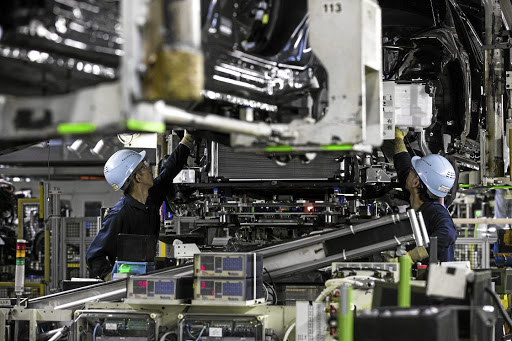
Toyota Motor Corp. employees work on the Crown vehicle production line at the company's Motomachi plant in Toyota City, Aichi, Japan, on Thursday, July 26, 2018. Toyota may stop importing some models into the U.S. if President Donald Trump raises vehicle tariffs, while other cars and trucks in showrooms will get more expensive, according to the automaker’s North American chief. Photographer: Shiho Fukada/Bloomberg

Toyota SA to invest over R4 billion in car assembly and parts

byadmin
05/02/2020

Toyota SA Motors (TSAM) has announced a R4.28bn investment in local vehicle assembly and parts supply. Speaking at the company’s...

Over 80 Kilos Cocaine Found On Dutch Plane In Argentina; Three Dutch Arrested

byadmin
05/02/2020

More than 80 kilograms of cocaine was found on a Martinair Cargo plane in Argentina. Seven men, three of whom...

Next Post

Cameron starts a whirlwind two-day tour of European capitals

  • Terms and Conditions
  • Disclaimer

© 2011 Customs Today -World's first newspaper on customs. Customs Today.

No Result
View All Result
  • Transfers and Postings
  • Latest News
  • Karachi
  • Islamabad
  • Lahore
  • National
  • Chambers & Associations
  • Business
  • About Us

© 2011 Customs Today -World's first newspaper on customs. Customs Today.