

LONDON: The Unites States’ first operational space weather satellite intended to provide an early warning of potentially harmful solar storms and activity has reached its final orbit in deep space, officials say.
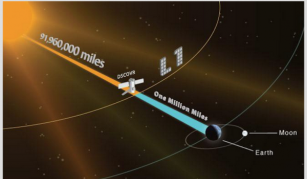
After traveling for more than three months since its launch, the National Oceanic and Atmospheric Administration’s Deep Space Climate Observatory has entered its permanent orbit more than a million miles from Earth, a release from NOAA headquarters reported.
The satellite will improve NOAA’s ability to issue warnings of potentially dangerous solar activity, which can result in geomagnetic storms in Earth’s atmosphere that can put satellites at risk and affect GPS systems, telecommunications and terrestrial power grids.
Starting in 2016, data from DSCOVR, combined with a new forecast computer model, will enable space weather scientists to predict such storms on a regional basis, the agency says.
“DSCOVR will trigger early warnings whenever it detects a surge of energy that could cause a geomagnetic storm that could bring possible damaging impacts for Earth,” says Stephen Volz with NOAA’s Satellite and Information Service.
DSCOVR will orbit at a particular point between the sun and the Earth known as a Lagrange point, which will give it an excellent vantage point for observing both.

Pakistan to get $3b loan from Islamic Trade Financing Corporation
ISLAMABAD: Islamic Trade Financing Corporation (ITFC) to provide Pakistan with a $3 billion loan, according to an official statement released...