
Customs Today
  • Home
  • Islamabad
  • Karachi
  • Lahore
  • National
  • Transfers and Postings
  • Chambers & Associations
  • Business
No Result
View All Result
Customs Today
  • Home
  • Islamabad
  • Karachi
  • Lahore
  • National
  • Transfers and Postings
  • Chambers & Associations
  • Business
No Result
View All Result
Customs Today
No Result
View All Result
Home Science & Technology Science

The future looks a lot hotter, scientists

byCustoms Today Report
01/05/2015
in Science, Science & Technology
Share on FacebookShare on Twitter

You might also like

Tesla driverless system to use updated radar technology

12/09/2016

Apple to develop its own self-driving technology

10/09/2016

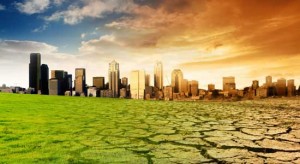
HARROW: Here’s something you don’t hear climate scientists say very often:“The bottom line is that things are not that complicated.”
That’s Reto Knutti, head of the Climate Physics Group at the Swiss Federal Institute of Technology in Zurich, speaking with The New York Times. And that warm feeling inside of you is the satisfaction of knowing that you’re about to understand some science!
Take a moment to savor that feeling. Knutti is a climate scientist, after all, so we know that whatever he says next is going to be a huge downer:
“You make the world a degree or two warmer, and there will be more hot days. There will be more moisture in the atmosphere, so that must come down somewhere.”
Wow, dude — that’s not science, that’s poetry. (Except that it is science, and the subject of a new paper that Knutti and his colleague Erich M. Fischer published yesterday in the journal Nature Climate Change.)
Using global climate models to simulate past and future warming scenarios, the duo set out to understand how anthropogenic climate change has and will continue to increase extreme heat and precipitation events — the hotter days and wetter air that Knutti was talking about.
Here’s what they found: Compared to a world where the industrial revolution never happened, today’s warming of about 1.5 degree Fahrenheit is responsible for a 22 percent increase in the frequency of extreme precipitation events and — more dramatically — a four- to five-fold increase in the frequency of 1-in-1,000 day extreme heat events.

Related Stories

Tesla driverless system to use updated radar technology

byCT Report
12/09/2016

WASHINGTON: Electric carmaker Tesla announced Sunday it was upgrading its Autopilot software to use more advanced radar technology. In a...


Apple to develop its own self-driving technology

byCT Report
10/09/2016

SAN FRANCISCO: Apple may not become an automaker, but it still wants to develop its own self-driving technology. The iPhone-maker's...

NASA spots slowest known magnetar

byCT Report
10/09/2016

WASHINGTON: Astronomers have found evidence of a magnetar - magnetised neutron star - that spins much slower than the slowest...

‘YouTubers’ outshining old-school television

byCT Report
09/08/2016

SAN FRANCISCO: A media revolution is taking place, and most people over 35 years of age aren’t tuned in. Millennial...

Next Post

Sri Lanka Textured Jersey profit jumps to Rs.1.3bn in Q4

  • Terms and Conditions
  • Disclaimer

© 2011 Customs Today -World's first newspaper on customs. Customs Today.

No Result
View All Result
  • Transfers and Postings
  • Latest News
  • Karachi
  • Islamabad
  • Lahore
  • National
  • Chambers & Associations
  • Business
  • About Us

© 2011 Customs Today -World's first newspaper on customs. Customs Today.