

Customs Today
  • Home
  • Islamabad
  • Karachi
  • Lahore
  • National
  • Transfers and Postings
  • Chambers & Associations
  • Business
No Result
View All Result
Customs Today
  • Home
  • Islamabad
  • Karachi
  • Lahore
  • National
  • Transfers and Postings
  • Chambers & Associations
  • Business
No Result
View All Result
Customs Today
No Result
View All Result
Home Uncategorized

Tough, fish scale-like material with soft flexibility could protect soldiers, astronauts

byCustoms Today Report
30/03/2015
in Uncategorized
Share on FacebookShare on Twitter

You might also like

Pakistan to get $3b loan from Islamic Trade Financing Corporation

20/10/2024

Lahore I&I & Enforcement anti-smuggling operations achieve record success in early FY 2024-25

10/09/2024

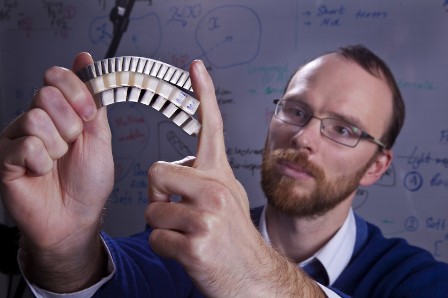
FRANCE: A team of researchers has come up with a revolutionary material that has superior anti-penetration properties while remaining flexible.
The new material, inspired by the way nature designed fish scales, could be used to make bulletproof clothing for the military and space suits that are impervious to micro-meteorites and radiation when astronauts embark on spacewalks.
Technion-Israel Institute of Technology’s Stephen Rudykh said that many species of fish are flexible, but they are also protected by hard scales, adding that taking inspiration from nature, they tried to replicate this protecto-flexibility by combining two layers of materials, one soft for flexibility and the other with armor-like scales. The secret behind this material is in the combination and design of hard scales above with soft, flexible tissue below.
Rudykh explained that generally, strength and flexibility are competing properties, but the research team found a way to increase the penetration resistance by a factor of 40, while the flexibility of the soft material was reduced by only a factor of five.
Rudykh added that that attribute allows for the fabric to be tailored to the wearer’s body and the environment that the wearer will be facing, adding that this work is part of a revolution in materials properties. Once they can gain control over a material’s micro properties, using 3-D printing we can create materials of an entirely different type, each with the ability to be adjusted to fit the wearer, the need, and the environment.
The researchers concluded that their findings provide new guidelines for developing simple material architectures that retain flexibility while offering protection with highly tunable properties.

Tags: fish scale-like materialmaterial with soft flexibility could protect soldiersTechnion-Israel InstituteTechnology's Stephen Rudykh

Related Stories

Pakistan to get $3b loan from Islamic Trade Financing Corporation

byCT Report
20/10/2024

ISLAMABAD: Islamic Trade Financing Corporation (ITFC) to provide Pakistan with a $3 billion loan, according to an official statement released...

Lahore I&I & Enforcement anti-smuggling operations achieve record success in early FY 2024-25

byCT Report
10/09/2024

LAHORE:  Regional Directorate of Customs Intelligence & Investigation has demonstrated exceptional performance in the first two months of the fiscal...

ICCI and CDA to join hands for tree plantation drive in Capital

byQaisar Mansoor
09/08/2023

ISLAMABAD: Islamabad Chamber of Commerce and Industry (ICCI) in collaboration with the Capital Development Authority (CDA) would jointly launch a...

Customs Officials Yawar Abbas & Tariq Mehmood kidnapped in Karachi

byCT Report
08/07/2023

KARACHI: Customs Intelligence Officer Yawar Abbas and Customs Preventive Officer Tariq Mehmood who were working against smuggling were kidnapped by...

Next Post

Australian stocks tumble in early move; S&P 200 declines 47.8pts

  • Terms and Conditions
  • Disclaimer

© 2011 Customs Today -World's first newspaper on customs. Customs Today.

No Result
View All Result
  • Transfers and Postings
  • Latest News
  • Karachi
  • Islamabad
  • Lahore
  • National
  • Chambers & Associations
  • Business
  • About Us

© 2011 Customs Today -World's first newspaper on customs. Customs Today.