BENGALURU: The decision by the Congress party-led United Democratic Front (UDF) government in Kerala to approve the sole bid submitted byAdani Ports and Special Economic Zone Ltd (APSEZ) to develop a new port at Vizhinjam in the southern part of the state presents the National Democratic Alliance (NDA) government with the best opportunity yet to turn the tables on the Congress, which has frequently attacked Prime MinisterNarendra Modi for his alleged proximity with the Ahmedabad-based group that runs India’s biggest commercial port at Mundra in Gujarat.
Adani Group owned by billionaire Gautam Adani and the Bharatiya Janata Party (BJP) have repeatedly denied allegations that Mundra port flourished under the rule of Modi in Gujarat, a charge often hurled by Congress vice-president Rahul Gandhi during public meetings in the run-up to the 2014 polls and thereafter.


More recently, a so-called memorandum of understanding (MoU) signed in November by Adani Group with the country’s largest lender State Bank of India (SBI) for a $1 billion loan to build a $7.8 billion coal mine-cum-port project in Australia during a visit to that country by Prime Minister Modi further stoked allegations of government influence, the perceived closeness between Modi and Adani and caused political uproar in India.
To be sure, seven months after the preliminary deal was struck, there is no official word on whether the loan was finally approved or not. Media reports quoting unnamed sources have indicated that SBI was set to scrap the preliminary deal.
The planned port at Vizhinjam has all the ingredients that can goad political rivals to go after Kerala chief minister Oommen Chandy and the Congress party.
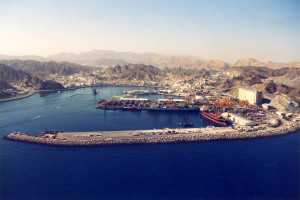
Vizhinjam is being developed as a container transshipment port to compete with the Colombo port. It has sufficient water depth for the purpose and its proximity to the main shipping lane is better than or similar to Colombo, which is currently the biggest transshipment facility in the region.
Colombo and Vizhinjam are located in close proximity to the international shipping route involving only a marginal diversion of about 20-25 nautical miles. While Colombo has a water depth of 16-18m, Vizhinjam will have much deeper berths and approach channel of up to 20m, capable of docking mega-container ships.