Customs Today
  • Home
  • Islamabad
  • Karachi
  • Lahore
  • National
  • Transfers and Postings
  • Chambers & Associations
  • Business
No Result
View All Result
Customs Today
  • Home
  • Islamabad
  • Karachi
  • Lahore
  • National
  • Transfers and Postings
  • Chambers & Associations
  • Business
No Result
View All Result
Customs Today
No Result
View All Result
Home Science & Technology Science

University of Oslo researchers throw rocket through northern lights to unlock space weather

byCustoms Today Report
20/02/2015
in Science, Science & Technology
Share on FacebookShare on Twitter

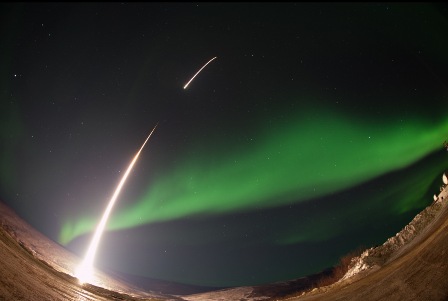
NEW YORK: The northern lights are more than one of nature’s most awe-inspiring sights. They are electromagnetic phenomena that can adversely affect power grids and communications and navigation systems. Researchers from the University of Oslo have flown a rocket through the phenomena to take a closer look with the aim of gathering data that will help in predicting space weather.

The northern lights are caused by solar flares from the Sun. But these same solar flares are the source of more than just the Aurora Borealis. On the Earth’s day side, sunlight strips electrons loose from the atmosphere, forming clouds of electrons that drift across the Arctic and, although they are invisible to our eyes, appear on radar screens and in super-sensitive cameras.


You might also like

Tesla driverless system to use updated radar technology

12/09/2016

Apple to develop its own self-driving technology

10/09/2016

Within just a few hours, electron clouds that form during the day over North America can cross the Arctic and reach Scandinavia after being drawn out of the polar region by the northern lights. The University of Oslo researchers have found that it is when electron clouds coincide with the northern lights that the most serious interference to navigation and satellite systems occurs. It is these rare but disruptive events that the ICI4 rocket, which launched today from Andoya Space Center in Norway, is tasked with exploring.

“We wished to find the causes of these interferences,” says Jøran Moen, Project Director. “We need this knowledge to establish a forecasting system for space weather.”

The rocket had been ready to go from February 9, but it wasn’t until today that the ideal conditions presented themselves. The team not only had to wait for the right local weather conditions, but the right solar weather conditions where the electron clouds coincided with the northern lights, so the rocket could fly through the phenomenon and collect its measurements.


Tags: Northern Lightsspace weatherUniversity of Oslo‘s researchers

Related Stories

Tesla driverless system to use updated radar technology

byCT Report
12/09/2016

WASHINGTON: Electric carmaker Tesla announced Sunday it was upgrading its Autopilot software to use more advanced radar technology. In a...

Apple to develop its own self-driving technology

byCT Report
10/09/2016

SAN FRANCISCO: Apple may not become an automaker, but it still wants to develop its own self-driving technology. The iPhone-maker's...

NASA spots slowest known magnetar

byCT Report
10/09/2016

WASHINGTON: Astronomers have found evidence of a magnetar - magnetised neutron star - that spins much slower than the slowest...

‘YouTubers’ outshining old-school television

byCT Report
09/08/2016

SAN FRANCISCO: A media revolution is taking place, and most people over 35 years of age aren’t tuned in. Millennial...

Next Post

Human brains grew under direction of specific snippets of DNA

  • Terms and Conditions
  • Disclaimer

© 2011 Customs Today -World's first newspaper on customs. Customs Today.

No Result
View All Result
  • Transfers and Postings
  • Latest News
  • Karachi
  • Islamabad
  • Lahore
  • National
  • Chambers & Associations
  • Business
  • About Us

© 2011 Customs Today -World's first newspaper on customs. Customs Today.