NEW YORK: Maritime regulators from the U.S., Europe and China will meet in Brussels next month to examine whether recently formed alliances among the world’s biggest container operators are adding to the costs of cargo owners because of unexpected delays at ports, according to a European Union official.
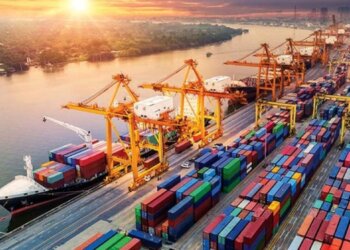
The creation of several big shipping alliances, as well as the addition of big ships that can handle many more containers than in the past, is causing delays at ports, including at busy U.S. West Coast ports. That’s now raising global regulatory scrutiny.


Officials from the Federal Maritime Commission, the U.S. watchdog, the European Commission and China’sMinistry of Transport are set to meet June 18, according to the EU official.
It will be a follow-up to their first meeting in Washington in December 2013.
At the time, the world’s three largest container shipping companies by volume– A.P. Møller-Mærsk A/S’s Maersk Line of Denmark, Swiss-based Mediterranean Shipping Co., and France’sCMA CGM–had agreed to a globe-spanning alliance. Critics said that proposed combination threatened to pressure prices for smaller players and shipping-service providers. U.S. and European regulators approved the alliance, but Beijing said no.
Maersk and MSC have since agreed to form a smaller alliance, called 2M, joining three other alliances between container shippers. The 2M alliance now moves around 35% of all goods between Asia and Europe, one of the world’s most important trade routes. The second-biggest alliance is called Ocean Three, and includes CMA CGM, China Shipping Container Lines Co. and Middle East shipping major United Arab Shipping Co. It controls a 20% slice of all cargo between Asia and Europe.
Container shipping, which moves over 95% of the world’s manufactured goods, is now largely controlled by around 15 mostly European and Asian operators. Alliance building has long helped them cut costs. But the recent flurry and size of alliance building has also seen the introduction of bigger vessels–some at least twice the size of those calling at U.S. ports for years.
Critics, including some regulators, have said that has created congestion at many ports around the world. Maersk and other big shipping companies contest that view.
In the U.S., where congestion has been the most extreme, the FMC agreed to call in shipping companies, port operators, inland cargo movers and cargo owners to discuss the congestion issues.
The commission has received complaints in recent months from U.S. importers claiming, among other things, that ships belonging to the same alliance call at West Coast ports at the same time. Importers say they are also often charged with congestion charges by the shipping companies because of the delays.
“We had shippers telling us they are being regularly charged for the congestion by shipping companies,” said FMC Commissioner Richard Lidinsky, a critic of some of the alliances, in a recent interview. “The operators cause the congestion, and they want to profit on top of it. This is unacceptable.”
Shipping line executives dispute that.
“While citing larger vessels as the cause of port congestion is easy to understand conceptually, the reality is that large vessels improve efficiency,” said Maersk Line spokesman Michael Storgaard. “Larger vessels lower the costs for the shipping lines. In our highly competitive market this means that the majority of the savings are passed on to our customers.”