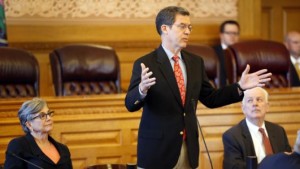
WASHINGTON: Kansas Gov. Sam Brownback’s signature special income tax cuts emerged mostly integral from a demanding legislative fight to close a budget deficit that arose after revenue failed to match the conservative governor’s predictions of an economic boom. Brownback and his GOP allies managed to avoid backtracking on past reductions on income tax rates.
But they had to slow down future rate cuts with the proviso that if revenues grow they could be restored. And they agreed to a small tweak to business tax breaks that are a central plank of his strategy to spur growth Instead, they raised the state’s sales tax to one of the highest rates in the nation and smokers will be paying 50 cents more for each pack of cigarettes. Republican legislators cobbled together a mix of tax policies to both balance the budget and attract just enough votes for passage, but it’s not yet clear whether they’ve created long-term fiscal stability. Brownback’s allies engineered a more conservative Legislature in 2012 elections, ousting most of the moderate state senators who’d resisted his push to slash personal income taxes. Those political successes boomeranged this year, as Republicans, who dominate the Legislature, repeatedly said it was not in their DNA to raise taxes and disagreements among multiple GOP factions made the annual session the longest in state history, at 113 days.