CARACAS: Already buffeted by widespread violence, crippling shortages, and skyrocketing inflation, Venezuelans will be confronted with a new burden in the coming weeks: nationwide electricity rationing.
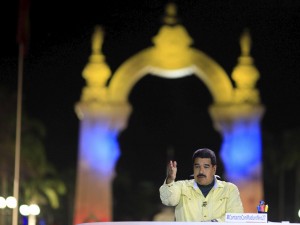
The government of President Nicolas Maduro said last week that a plan to ration and otherwise adjust energy usage would go into effect to address increasing demand, which has been spurred on in part by a recent rise in temperatures in the Caribbean country.


The measures of the rationing plan include reducing workday length for some public officials to six hours, requesting that private firms increase their electrical efficiency, and the inspecting of factories and malls to ensure that they comply with reduced-consumption goals.
The administration also called on citizens to use power more responsibly, as residential use makes up 40% of demand in Venezuela.
“We are in the presence of a significant increase in the temperature,” said Jesse Chacón, the minister of energy, according to Reuters.
“In one week the demand on the electrical system has risen 1,500 megawatts … in these conditions the system begins to have stability problems,” Chacón added.
Electrical problems — including rolling blackouts across swaths of the country — have plagued Venezuela consistently in recent years; according to Reuters, in the past few days 10 of the nation’s 24 states have reported power failures.
Generous subsidies allow many Venezuelans to consume energy cheaply, and households use on average 5,878 kilowatt-hours annually, the highest level of per capita consumption in the region. With summer approaching, that consumption is not likely to abate anytime soon. Temperatures have surpassed 90 degrees Fahrenheit in the capital, Caracas. In the western state of Zulia, a record high was recorded Wednesday when temperatures surged to 51 degrees Celsius, or roughly 123 Fahrenheit.
Hugo Chávez, the late president, nationalized the country’s electrical industry in 2007, and the government has since tried to increase electrical-production capacity; its installed capacity now stands at some 28,000 megawatts. But the recent increase in demand to 18,300 megawatts from 16,800 reportedly exceeded the system’s operational capacity and created the need for a rationing plan.
This rationing plan comes at a bad time for Maduro. His approval has slipped below 30% in recent months (his Twitter following notwithstanding), and his party faces a parliamentary election later this year that could see its National Assembly majority — and its ability to pass laws and decrees with ease — eroded.
Moreover, financial woes may imperil the administration’s ability to address infrastructural challenges as well as pursue its typical largess toward public projects in the run-up to elections, which have yet to be scheduled.
According to a recent poll, more than 80% of Venezuelans have a negative view the Maduro administration’s economic model. The poll also found that a majority of the population believes price controls were responsible for shortages and disagreed with the government’s emphasis on the public sector to spark growth.
If the lights continue to flicker, and voters connect that with Maduro, then the Venezuelan president and his party could find themselves left out in the dark.