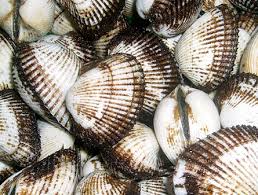
HCM CITY: Vietnamese bivalve mollusk exports to the EU are expected to face more challenges as imports have plummeted and the country faces stiff competition from other exporters, industry insiders heard at a forum this week.
Le Hang, deputy director of Viet Nam Association of Seafood and Exporters and Producers (VASEP), said that imports from Italy, the UK and Spain had fallen between 15 and 35 per cent this year.


The EU is Viet Nam’s largest importer of bivalve mollusks, with total export value of 68 – 70 per cent. Portugal, Spain and Italy are the top three importers of bivalve mollusks from Viet Nam, according to figures from VASEP.
Last year, exports to the EU reached $54.4 million, up 8.8 per cent year-on-year. France, the world’s largest scallop import market, had a record increase in scallop imports in the first half of the year.
Viet Nam faces stiff competition from Peru, which accounted for 25-30 per cent of French scallop imports this year. Despite the competition, Vietnamese bivalve mollusk exports are expected to reach US$85 million by the end of the year, a rise of 5 per cent year-on-year, according to VASEP.
Exports of bivalve mollusks totalled $40.21 million in the first half of the year, up 4.6 per cent year-on-year. Last year, exports reached $80 million for the entire year, an increase of 10.7 per cent over 2013.
The top nine export markets for bivalve mollusks are the EU, Japan, the US, ASEAN-member countries, South Korea, Hong Kong, Australia, Taiwan and Canada, which account for 92 per cent of total exports.
Hang said that Viet Nam should try to process more clams and other mollusk products for export this year, as demand has increased. Besides scallops, oysters and mussels, major markets including the US, Japan, South Korea, the EU and Australia had increased processed clam imports between 5 per cent and 25 per cent last year.
Ngo The Anh of the Directorate of Fisheries said the farming area for bivalve mollusks totalled more than 150,000 ha, while the country’s total potential area for breeding was 230,000 ha in coastal provinces and the Cuu Long (Mekong) Delta region.
In Viet Nam, 26 species of bivalve mollusks exist, five of which are considered valuable, including hard clams, green mussels, oysters, snout otter clams and blood cockles. Anh also pointed out a number of challenges, such as breeding, unsuitable planning, pollution and epidemics.
He said that bivalve mollusk breeds were mostly imported from China. Because mass production technology does not exist, the quality of the mollusks was inconsistent. One of the critical challenges facing the Vietnamese industry is a lack of specific planning.
Tran Ngoc Nhuan, of Ben Tre’s Department of Agriculture and Rural Development, said in 2009 Ben Tre clam fishery received certification from the Marine Stewardship Council, becoming the first fishery in Southeast Asia to meet the organisation’s sustainability and management standards.
After certification, the prices for clams then rose by 30 -50 per cent. However, Nhuan said many bivalve mollusks had died because of saline intrusion in the Mekong Delta, mostly due to climate change. Nhuan recommended that the Ministry of Agriculture and Rural Development and other agencies provide training to improve management of bivalve mollusk farming.
He also recommended that the Government provide funds for the province so farmers can qualify for Marine Stewardship Council certification. Certification requires annual monitoring and assessment of farmers.
Anh of the Directorate of Fisheries said the country should develop sustainable commercial breeds and use cultivation methods that can take advantage of land and water areas to raise bivalve mollusks.
To reduce disease and increase quality, the density of growth in breeding areas should be reduced, he said. Anh said that HACCP and GAP certification should also be sought to ensure safe production, and that industrial bivalve mollusk areas should set up environmental and disease-monitoring centres.
Speakers at the conference agreed that solutions should include issuance of new regulations, standards and norms for planning, and procedures for growing and producing seed technologies.
The Government should also create more incentives for bivalve mollusk farming and encourage connections among farmer cooperatives, they said. Training programmes on management as well as technical and extension programmes should be provided, experts recommended.