ISLAMABAD: The World Bank launched a series of Policy Notes that outline critical policy shifts required for a “productive, sustainable, resilient, and healthy” Pakistan.
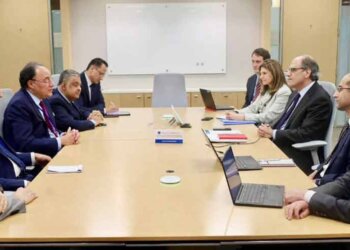
According to a statement, World Bank’s Regional Vice President for South Asia, Martin Raiser – who is in Pakistan to reaffirm the Bank’s support – launched the policy notes.

The policy notes—focusing on child stunting, fiscal sustainability, private sector growth, energy, learning poverty, agriculture, and climate change—are the culmination of several months of outreach and engagements conducted across the country under the “Reforms for a Brighter Future – Time to Decide” banner.
They are intended to help inform the public policy dialogue in the context of the upcoming elections.
“Pakistan’s economy is stuck in a low-growth trap with poor human development outcomes and increasing poverty. Economic conditions leave Pakistan highly vulnerable to climate shocks, with insufficient public resources to finance development and climate adaptation,” said Martin Raiser.
“It is now time for Pakistan to decide whether to maintain the patterns of the past or take difficult but crucial steps towards a brighter future.” The policy notes argue that Pakistan needs to address its acute human capital crisis—including the high prevalence of stunting and learning poverty—by adopting a coordinated and coherent cross-sectoral approach to basic services involving both provincial and federal governments.
He suggested Pakistan Improve the quality of public spending and take serious measures to expand the revenue base, ensuring that the better off pay their share.
The country to Pursue business regulatory and trade reforms and reduce the presence of the state in the economy to increase productivity, competitiveness, and exports, he said.
He said that Pakistan should remove distortions that undermine the performance of the agricultural and energy sectors, including through subsidy reform and privatisation of electricity distribution companies.
“Almost 40% of children in Pakistan suffer from stunted growth, more than 78% of Pakistan’s children cannot read and understand a simple text by the age of 10. These are stark indicators of a silent human capital crisis that needs priority attention,” said Martin Raiser. “With additional spending on water and sanitation of around 1% of GDP per year and better coordination at the local level, stunting could be halved over a decade with significant positive impacts on growth and incomes. This is just one example of the huge economic benefits a coherent and decisive reform strategy could have”.
During his visit he will meet government officials at the Federal and Provincial levels, and representatives from the private sector and academia. He will also visit the DASU and Tarbela Hydropower Projects, as well as project sites in Sindh and Punjab.
After launching the reforms report on Pakistan, while addressing the press conference, The World Bank’s Regional Vice President for South Asia, Martin Raiser said that human capital investment is very important in Pakistan without which a sustainable economy will be difficult.
Bank’s Regional Vice President for South Asia, said that the sectors of education, health and environment are important, where the economic growth in Pakistan can be improved by allocating more budget.
He called tax reform and important measures to improve tax to Gross Domestic Production (GDP) as necessary, without which the development program in the budget cannot run properly.
Martin Raiser said that fiscal discipline has a very important role in sustainable economic growth in which steps are needed.
He said that fiscal consolidation is the need of the hour and added that the environment is currently a regional issue in South Asia and countries are influencing each other in terms of environment.