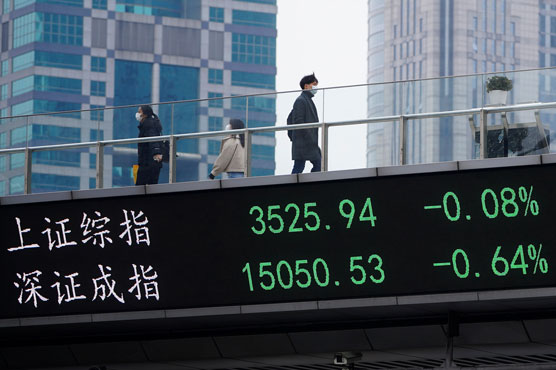
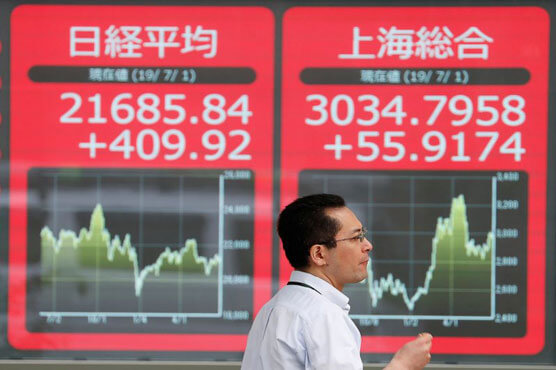
NEW YORK: Oil-rich nations are reeling from the latest drop in crude oil prices, which plunged to six-year lows on rising fears of an economic slowdown in China, the world’s largest energy consumer. Weaker Chinese demand is threatening to further depress prices and strain the governments that are most dependent on oil revenues to fund their public budgets and pay off foreign debts.
Oil prices have fallen almost 60 percent since last summer due to a widening market imbalance. Tepid economic growth in China and Europe is curbing the global appetite for crude, which is in overly abundant supply. U.S. producers are partly driving the glut, with American oil production nearing record levels in 2015. Saudi Arabia is further straining the market, as the kingdom and other OPEC members refuse to dial down their output. Such a move would help raise oil prices but threaten their share of the Asian markets.
Brent crude, the global benchmark, plummeted to $42.51 a barrel Monday, its weakest level since March 11, 2009, after China cut its benchmark interest rate for the fifth time in nine months — an attempt to jump-start its sluggish economy. U.S light crude dropped to $38.24 a barrel, its weakest since February 2009.
Prices recovered slightly as markets rebounded from Monday’s stock scare. Brent crude was up 0.37 percent to $43.37 per barrel as of 7:56 a.m. EDT. U.S. light crude gained 0.51 percent to $39.51 per barrel.
Oil-reliant countries with large foreign exchange reserves and broader borrowing abilities will be able to endure the economic strain in the short term. But governments without strong financial buffers are being forced to make dramatic cuts in their reserves and go deeper into debt, leading to weaker currencies, rising inflation and tightening public budgets for infrastructure projects, food imports, education spending and state employee salaries.
“Every government that’s heavily dependent on oil revenue, either as a share of income or export revenues, is having to respond in some way,” said David Goldwyn, president of Goldwyn Global Strategies LLC, an energy consulting firm. “At $40 a barrel, everybody’s budgets are underwater, and some quite dramatically. It’s increasing the fiscal deficit and requiring countries that were already facing low growth to suffer even higher pressures.”
Goldwyn was the State Department special envoy and coordinator for international energy affairs in the first Obama administration. He said the current oil prices raise “a red flag” for political tensions and civil unrest throughout the oil-producing world. “You look at the countries that are fragile to begin with” — such as Iran, Yemen, Libya, Venezuela and Nigeria — “and then you short them money, and that’s where you have to watch the stability issues,” he said.

Markets, oil drop in Asia but bitcoin edges towards $50,000
HONG KONG: Markets fell in Asia on Friday in holiday-thinned trade with investors awaiting developments in US stimulus talks, while...