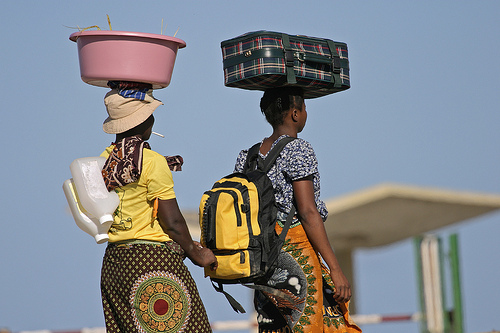
HARARE: Representation of women at the top in business in Zimbabwe has gone up over the years following the implementation of economic empowerment vehicles that encourage and support women’s participation in the economy.
Once confined to teaching, nursing and secretarial careers, women in Zimbabwe have slowly broken the traditional path and now head powerful organisations while others are running successful businesses, a feat that could not be attained during the colonial era.


“Women’s economic achievement in the different sectors across Zimbabwe is a testimony of Government’s commitment to uplift women after decades of repression, which they endured during the Ian Smith regime.
“We applaud the Government for setting up a framework on economic empowerment which looks at the empowerment of women across sectors. It is a result of that and many similar initiatives that have propelled women to success,” said Ms Hazel Chinake the chairperson of Network for African Business Women (Zimbabwe Chapter).
Ms Chinake, whose organisation has a membership of 9 000 said Government continues to present women with opportunities in mining, construction, energy and information communication technology, areas that were once dominated by men.
“Black women never dreamt of reaching this era, where women have become equal partners in business and are doing more for themselves than before,” she said.
During the colonial era, black Zimbabwean women suffered from the gender discrimination of the pre-independence era, where business opportunities, access to cash, trading rights and enrolment in good schools were only reserved for the whites.
This discrimination left many women without skills and the level of literacy needed to enter the mainstream economy or to deal with the unnecessary plethora of rules and regulations that were required when setting up a business of any kind.
And to avoid as much of the red tape as they could, the majority of Zimbabwean women opted for “informal activities” such as hawking and cross-border trading to neighbouring countries like South Africa and Botswana, neither which presented meaningful income or viable business opportunities.
Plain old fashioned male prejudice against women and their capabilities, made it extremely difficult to break through the glass ceiling in the economy that had been put up by the Rhodesian system.
Susan Peters a renowned businesswoman who started a retail business in 1980, said women struggled to venture into business because of the stringent conditions that were set aside for blacks, particularly women.